

Step by Step Dog Training for Better Urban Behavior
More than 60 percent of American urban dog owners report training setbacks during the coldest months. For those navigating snowy sidewalks and busy apartment life, creating focused spaces and finding the right gear brings calm to daily routines. This guide delivers practical steps that blend proven training methods with winter style so you and your dog stay comfortable, confident, and in step together all season.
Table of Contents
- Step 1: Prepare The Ideal Training Space Indoors And Outdoors
- Step 2: Select Effective Winter Apparel And Rewards
- Step 3: Establish Clear Communication With Your Dog
- Step 4: Introduce Core Commands Using Positive Reinforcement
- Step 5: Monitor Progress And Adjust Techniques Continuously
Quick Summary
| Key Point | Explanation |
|---|---|
| 1. Create Distraction-Free Training Spaces | Design both indoor and outdoor environments that minimize distractions for effective learning. |
| 2. Choose Appropriate Winter Gear | Select insulated, waterproof apparel to keep your dog warm and comfortable during training. |
| 3. Use Positive Reinforcement Consistently | Employ immediate rewards and clear cues to build a strong communication foundation with your dog. |
| 4. Monitor Progress and Adjust Techniques | Continuously evaluate your dog’s response and adapt training methods to maintain engagement and success. |
| 5. Keep Training Sessions Short and Engaging | Ensure training remains fun and effective by limiting session times to prevent mental fatigue. |
Step 1: Prepare the Ideal Training Space Indoors and Outdoors
Creating the perfect training environment is essential for successful dog behavior modification. Your goal is to design spaces that minimize distractions and maximize learning potential for your urban canine companion.
For indoor training, start by establishing a dedicated area that feels safe and comfortable. Dog crates provide a controlled space where your dog can focus without external interruptions. Choose a quiet corner away from high traffic zones in your home. Select a crate that allows your dog to stand, turn around, and lie down comfortably. Add soft bedding and a few quiet chew toys to make the space inviting.
Outdoor training requires strategic location selection. Begin in quiet areas with minimal stimuli such as residential side streets or small neighborhood parks during less busy hours. Start in quiet spaces and gradually progress to more distracting environments as your dog becomes more proficient. Ensure the outdoor space is securely fenced or use a long training lead to maintain control while allowing exploration.
Remember that consistency is key. By creating structured training spaces both inside and outside, you provide your dog with clear boundaries and expectations. This approach helps reduce anxiety and increases learning potential.
Here’s a quick reference comparing indoor and outdoor training space essentials:
| Aspect | Indoor Training Space | Outdoor Training Space |
|---|---|---|
| Distraction Level | Controlled, minimal distractions | Variable, may increase over time |
| Safety Features | Crate, soft bedding, safe toys | Fenced areas, training lead required |
| Comfort | Quiet corner, away from traffic | Quiet locations, avoid busy hours |
| Progression | Start here for basics | Move here for advanced practice |
Pro tip: Always keep training sessions short and positive to maintain your dog’s engagement and prevent mental fatigue.
Step 2: Select Effective Winter Apparel and Rewards
Choosing the right winter gear and motivational rewards is crucial for maintaining your dog’s comfort and training momentum during cold weather. Your goal is to ensure your urban canine companion stays warm, protected, and enthusiastic about learning.
Proper winter apparel is essential for protecting dogs from severe weather conditions, especially for small or short-haired breeds. Start by selecting a well fitted winter coat that covers your dog’s core body while allowing free movement. Look for waterproof materials with insulation that protects against wind and cold. Measure your dog carefully to ensure a snug fit that doesn’t restrict movement or cause chafing. Paw protection is equally important consider dog booties that shield sensitive paw pads from cold surfaces and harmful salt residue.
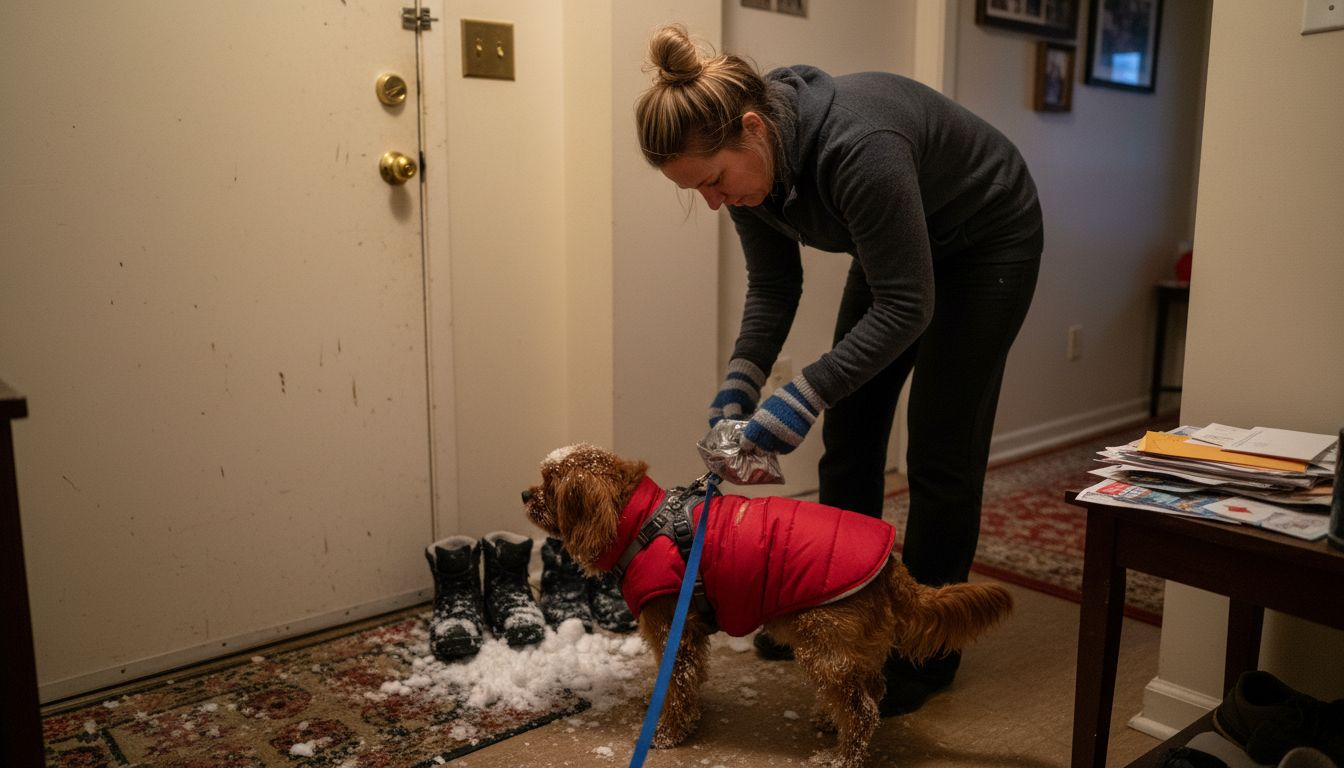
When selecting rewards, focus on high value treats that are extra motivating during shorter winter training sessions. Choose compact treats that can be quickly consumed and keep your dog engaged. Soft treats work best in cold weather as they are easier to handle with gloves and can be quickly eaten. Consider warm, nutrient dense options that provide both motivation and a small energy boost.
Remember that winter training requires flexibility. Be prepared to adjust your expectations and keep sessions shorter but more frequent to maintain your dog’s interest and prevent cold weather discouragement.
For a concise overview, compare these winter gear and reward selection tips:
| Category | Key Advice | Training Benefit |
|---|---|---|
| Winter Coat | Insulated, waterproof, snug fit | Maintains body heat |
| Dog Booties | Shields paws from salt and cold | Prevents injury, improves grip |
| Treat Type | Soft, high-value, easy to handle | Keeps motivation high |
Pro tip: Keep treats warm and easily accessible inside an inner jacket pocket to prevent them from freezing during outdoor training.
Step 3: Establish Clear Communication with Your Dog
Successful dog training hinges on developing a communication system that helps your urban canine understand and respond to your expectations. Your primary goal is to create a shared language that bridges the gap between human instruction and dog comprehension.
Teaching commands paired with consistent verbal cues and hand signals forms the foundation of effective communication. Start by selecting short, distinct commands that are easy to pronounce and differentiate. Use a clear, firm voice with consistent tone and volume. Pair each verbal command with a specific hand signal to reinforce understanding. For instance, a raised palm might mean ‘stay’ while an open hand pointing down could signal ‘sit’. Practice these signals repeatedly in a quiet environment before introducing distractions.
Positive reinforcement is crucial in building a robust communication framework. Reward your dog immediately when they respond correctly to prevent confusion. Use high value treats and enthusiastic verbal praise to mark desired behaviors. Pay attention to your dog’s body language and adjust your communication style to match their energy and receptiveness. Some dogs respond better to soft spoken instructions while others need more direct guidance.
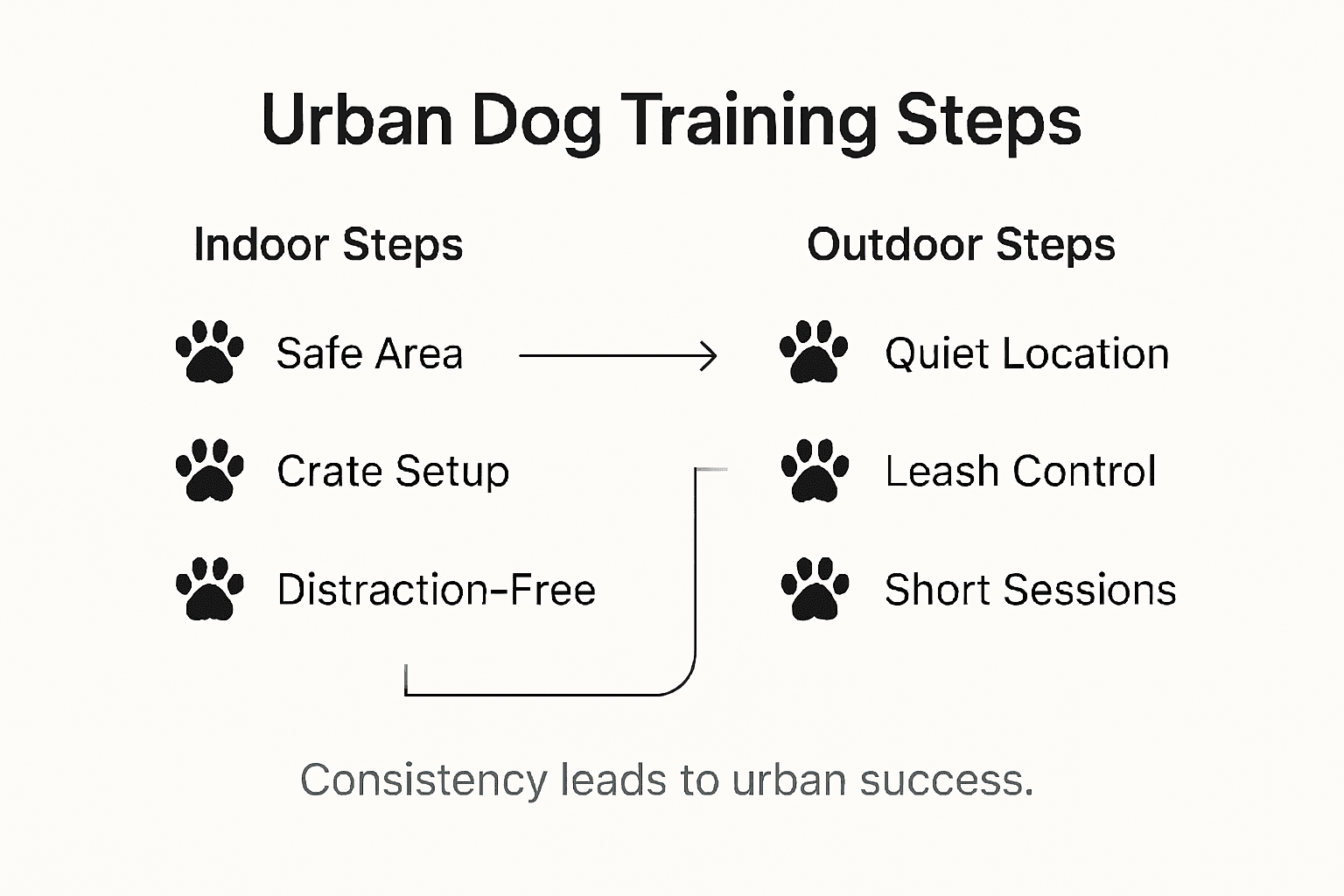
Consistency transforms communication from a training exercise to a natural dialogue between you and your dog. Practice commands in various settings and gradually increase complexity as your dog becomes more proficient.
Pro tip: Record your training sessions on video to analyze your hand signals and verbal cues for clarity and consistency.
Step 4: Introduce Core Commands Using Positive Reinforcement
Teaching fundamental dog commands creates a foundation for communication and establishes clear expectations between you and your urban companion. Your objective is to build a training approach that is both effective and enjoyable for your dog.
Teaching core commands requires a systematic approach using small high-value treats and consistent marker signals. Begin with the most basic command sit by holding a treat close to your dog’s nose and slowly moving it upward. As your dog’s head tilts back to follow the treat, their bottom will naturally lower. The moment they sit, mark the behavior with a clear word like ‘yes’ and immediately reward them. Practice this sequence in short five minute sessions to prevent frustration and maintain engagement.
Progress through commands like ‘down’ and ‘stay’ using similar positive reinforcement techniques. For the ‘down’ command, start with your dog in a sitting position and move a treat from their nose to the ground. When they follow the treat and lie down, immediately reward and praise. The ‘stay’ command requires gradual progression start with brief moments and slowly increase duration. Always reward your dog for maintaining the position and never punish them for breaking the stay.
Consistency and patience are your greatest tools. Practice commands in various environments to help your dog generalize the learning and build confidence in different scenarios.
Pro tip: Practice commands during natural daily interactions like before meals or walks to reinforce learning without formal training sessions.
Step 5: Monitor Progress and Adjust Techniques Continuously
Successful dog training is an ongoing process that requires constant observation and strategic adaptation. Your goal is to create a flexible learning environment that supports your dog’s growth and maintains their motivation.
Training effectiveness depends on continually evaluating your dog’s behavior and adjusting techniques accordingly. Begin by establishing a tracking system to document your dog’s command mastery and behavioral improvements. Note specific details like response time, consistency, and environmental distractions. Use a hierarchy of rewards from low to high value treats to maintain engagement and challenge your dog appropriately. Pay attention to subtle body language signals that indicate stress or disinterest which might suggest a need to modify your current training approach.
Recognize that training progress is not linear. Some days your dog will excel while other sessions might feel like steps backward. This is normal. Adjust session lengths and complexity based on your dog’s energy levels and focus. When you notice a training plateau or decreased enthusiasm, it might be time to introduce new challenges or take a short break to prevent burnout. Ensure consistency among all family members who interact with your dog to avoid confusing training signals.
Remember that every dog learns differently. What works for one might not work for another. Stay patient and be willing to experiment with various techniques to find what resonates best with your urban companion.
Pro tip: Keep a training journal to track patterns in your dog’s learning progress and identify the most effective motivation strategies.
Equip Your Urban Dog for Success with FurFamilyClub
Training your dog for better urban behavior means addressing challenges like creating distraction-free spaces, keeping your dog warm during winter sessions, and using clear communication methods. You want your companion to learn confidently while feeling comfortable and motivated throughout every step from indoor exercises to outdoor adventures. That is why choosing the right gear is just as important as the training techniques themselves.

Discover premium winter apparel and functional accessories at FurFamilyClub designed to protect your dog from cold weather and keep them cozy during training. From insulated coats and durable dog booties to soft bedding and high-quality treats, our carefully selected products support positive reinforcement and promote your dog’s well-being. Make every session enjoyable and productive by outfitting your dog with the best gear adapted for city life and seasonal challenges. Visit FurFamilyClub now and take the next confident step in your dog training journey.
Frequently Asked Questions
How can I create an ideal indoor training space for my dog?
To create an ideal indoor training space, establish a quiet and comfortable area using a dog crate. Make sure it feels safe and add soft bedding and a few quiet toys to keep your dog focused and engaged during training sessions.
What should I consider when selecting outdoor training spaces for my dog?
When selecting outdoor training spaces, look for quiet areas with minimal distractions, such as residential side streets or small parks during less busy hours. Ensure the area is securely fenced or use a long training lead to maintain control while allowing your dog to explore safely.
What type of winter apparel is best for protecting my dog during training?
Choose a well-fitted winter coat that covers your dog’s core, made from waterproof and insulated materials for protection against cold weather. Also, consider dog booties to shield their paws from cold surfaces and harmful salt residue, helping them stay comfortable during outdoor training sessions.
How can I communicate effectively with my dog during training?
Develop effective communication by teaching commands with consistent verbal cues and hand signals. Use short, distinct commands and pair them with clear gestures, ensuring to practice these in a quiet environment before adding distractions.
What is the best method for teaching my dog core commands?
The best method for teaching core commands is to use positive reinforcement with high-value treats. Begin with basic commands like ‘sit,’ rewarding immediately when your dog responds correctly, and practice in short training sessions to maintain their interest and motivation.
How do I monitor my dog’s training progress and adjust techniques?
Monitor your dog’s training progress by keeping a training journal that tracks command mastery and behavioral improvements. Adjust your techniques based on their responses and energy levels, ensuring to maintain flexibility by varying session lengths and complexity as needed.


