

Interactive Dog Toys: Keep Your Pup Engaged Indoors
Cold weather in urban areas can make every dog walk feel like a chore, leaving pet owners searching for ways to keep their dogs happy indoors. When winter hits, finding stylish and durable toys that offer both stimulation and comfort becomes much more than a luxury. With interactive dog toys designed for mental enrichment and physical engagement, you can create warm, rewarding play experiences that help your dog thrive all season long.
Table of Contents
- Defining Interactive Dog Toys And Their Purpose
- Key Types Of Interactive Dog Toys For Winter
- How Interactive Toys Promote Mental Stimulation
- Safety Features And Durability In Cold Weather
- Choosing The Right Toy For Urban Lifestyles
Key Takeaways
| Point | Details |
|---|---|
| Interactive Dog Toys Enhance Well-Being | These toys provide cognitive enrichment, physical exercise, and emotional engagement, thereby improving your dog’s overall health. |
| Diverse Types for Winter Activities | Utilize puzzle toys, treat dispensers, and sensory engagement toys to keep dogs mentally and physically stimulated indoors during the winter months. |
| Safety and Durability Are Crucial | Choose toys made from high-quality, non-toxic materials that remain safe and functional in cold weather to prevent potential hazards. |
| Selecting Suitable Toys for Urban Dogs | Opt for compact, multifunctional toys that minimize noise and fit well in small living spaces while meeting your dog’s mental and physical needs. |
Defining Interactive Dog Toys and Their Purpose
Interactive dog toys represent sophisticated tools designed to stimulate canine cognitive function and physical engagement beyond traditional play objects. These innovative products are specifically engineered to challenge dogs mentally and physically, providing meaningful interactions that go far beyond simple entertainment. Innovative toy designs serve critical purposes in enhancing pet welfare and strengthening human-animal relationships.
At their core, interactive dog toys serve multiple essential functions. They provide mental stimulation, preventing boredom and reducing potential destructive behaviors common in urban environments with limited space. These toys typically incorporate puzzle elements, treat dispensing mechanisms, or electronic components that respond to a dog’s actions, creating dynamic play experiences. Research indicates that such toys can help assess canine cognitive abilities, making them valuable tools not just for entertainment but also for understanding a dog’s problem solving skills and behavioral patterns.
The primary objectives of interactive dog toys include cognitive enrichment, physical exercise, and emotional engagement. Cognitive Enrichment involves presenting dogs with challenges that require problem solving, such as puzzle feeders that require strategic manipulation to release treats. Physical Exercise components encourage movement and active play, helping dogs burn energy even in confined indoor spaces. Emotional Engagement refers to the toy’s ability to maintain a dog’s interest and provide a sense of accomplishment when they successfully interact with the toy.
Pro tip: Select interactive toys that match your dog’s size, breed, and individual play style to maximize engagement and prevent potential frustration or disinterest.
Key Types of Interactive Dog Toys for Winter
Interactive dog toys have evolved significantly to address the unique challenges of keeping dogs mentally and physically stimulated during cold winter months. Winter dog toy varieties offer urban pet owners innovative solutions for maintaining their dog’s engagement when outdoor activities become limited. These specialized toys are designed to provide comprehensive mental and physical stimulation in compact indoor spaces.
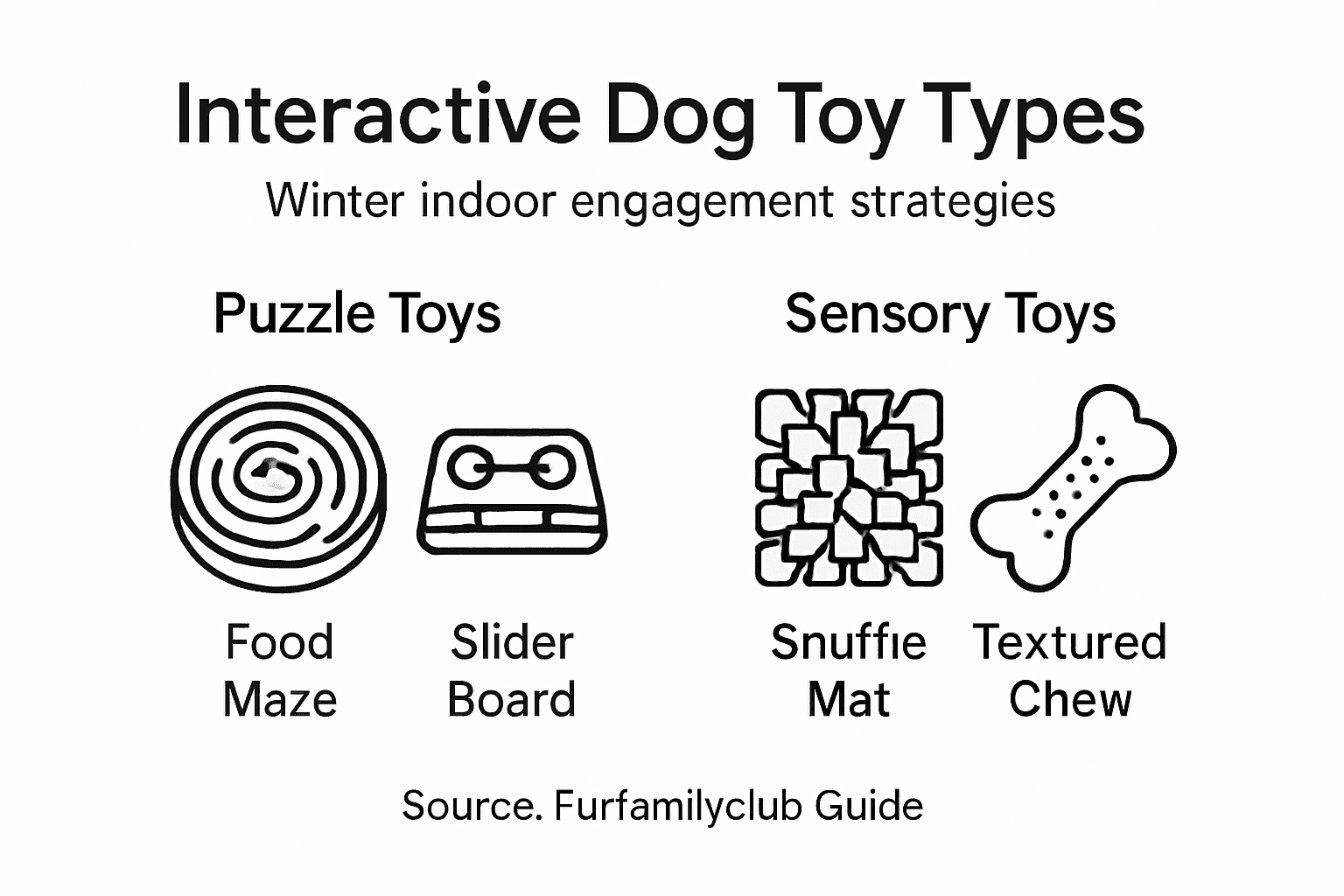
The primary categories of interactive dog toys for winter include several specialized types. Puzzle Toys challenge dogs’ cognitive skills by requiring problem solving to access treats or rewards. These typically feature complex mechanisms like sliding panels, hidden compartments, or multi-step challenges that keep dogs intellectually engaged. Treat Dispensing Toys combine mental stimulation with food motivation, releasing small treats as dogs manipulate the toy, which helps prevent boredom and maintains their interest for extended periods.

Another essential category includes Sensory Engagement Toys. Snuffle mats, textured chew toys, and interactive plush items with hidden squeakers provide tactile and auditory stimulation. These toys are particularly valuable during winter when dogs have reduced physical activity. Some advanced interactive toys even incorporate electronic components that respond to a dog’s actions, creating dynamic play experiences that can be enjoyed entirely indoors.
Chew Toys with interactive elements also play a crucial role in winter entertainment. These toys are designed to be durable, mentally engaging, and capable of withstanding intense chewing while providing ongoing stimulation. They often feature intricate textures, treat-hiding capabilities, or design elements that make them more challenging and interesting than traditional chew toys.
Pro tip: Rotate your dog’s interactive toys weekly to maintain novelty and prevent boredom, ensuring continued engagement throughout the long winter months.
Here is a summary of popular interactive dog toy types and their main winter benefits:
| Toy Type | Primary Mental Benefit | Physical Benefit | Indoor Suitability |
|---|---|---|---|
| Puzzle Toy | Problem-solving skills | Light activity | Excellent for confined spaces |
| Treat Dispenser | Food motivation/focus | Active manipulation | Keeps dogs busy indoors |
| Sensory Engagement | Tactile/auditory cues | Mild movement | Ideal for low-energy play |
| Interactive Chew Toy | Stress relief/engagement | Intense chewing exercise | Durable and safe indoors |
How Interactive Toys Promote Mental Stimulation
Mental stimulation for dogs goes far beyond simple physical exercise, representing a critical component of canine cognitive health and overall well-being. Cognitive challenges through play provide dogs with opportunities to engage their problem-solving skills, memory retention, and executive functions in ways that traditional passive play cannot achieve. Interactive toys serve as sophisticated tools that transform routine playtime into meaningful cognitive development experiences.
The neurological benefits of interactive toys are profound and multifaceted. Puzzle Mechanisms require dogs to think strategically, manipulating toys to access rewards, which activates complex neural pathways. These cognitive challenges trigger the brain’s reward centers, releasing dopamine and creating positive associations with learning and problem solving. By presenting dogs with increasingly complex tasks, interactive toys help develop mental flexibility, enhance spatial reasoning, and improve overall cognitive resilience.
Interactive toys also play a crucial role in preventing cognitive decline, especially for urban dogs with limited environmental stimulation. The mental engagement provided by these toys mimics the complex problem-solving scenarios dogs would encounter in more natural environments. Toys that require sequential actions, memory tracking, or strategic manipulation help maintain neurological plasticity, potentially slowing age-related cognitive deterioration and keeping dogs mentally sharp throughout their lives.
Moreover, these toys address psychological needs beyond pure mental exercise. They provide emotional enrichment by reducing stress, preventing boredom, and creating positive engagement opportunities. The mental challenges presented by interactive toys can help mitigate destructive behaviors often caused by understimulation, transforming potential anxiety into constructive, engaging play experiences.
Pro tip: Choose interactive toys that progressively increase in difficulty to continuously challenge your dog’s cognitive abilities and maintain their mental engagement.
Safety Features and Durability in Cold Weather
Ensuring the safety and durability of interactive dog toys during winter requires careful consideration of multiple critical factors. Dog toy safety standards emphasize the importance of selecting toys that can withstand extreme temperature variations while maintaining structural integrity and preventing potential hazards. Urban dog owners must be particularly vigilant about choosing toys that remain safe and functional in cold, challenging environments.
Material Composition plays a pivotal role in winter toy durability. High-quality interactive toys should be constructed from robust, non-toxic materials that resist cracking, splitting, or becoming brittle in freezing temperatures. Thermoplastic elastomers, medical-grade silicone, and reinforced rubber compounds offer superior performance, maintaining flexibility and strength even when exposed to significant temperature drops. These advanced materials help prevent potential choking hazards and ensure the toy’s structural reliability throughout winter months.
Size and design considerations are equally crucial for winter toy safety. Toys must be appropriately sized for the specific dog breed, with no small detachable parts that could become choking risks. Interactive toys designed with seamless construction, reinforced seams, and minimal weak points provide enhanced durability. Advanced manufacturing techniques now allow for creating toys with integrated safety features like rounded edges, puncture-resistant materials, and stress-tested components that can withstand aggressive chewing and harsh environmental conditions.
Beyond physical durability, winter interactive toys must also address potential psychological safety concerns. Toys that prevent boredom and reduce anxiety can help mitigate destructive behaviors common during indoor confinement. By selecting interactive toys with multiple engagement levels, owners can provide mental stimulation that reduces stress and potential aggressive behaviors triggered by prolonged indoor isolation during cold weather.
Pro tip: Inspect interactive toys weekly for signs of wear, immediately replacing any damaged items to prevent potential safety risks during winter play sessions.
The table below compares key material and safety considerations for winter dog toys:
| Feature | Why It Matters in Winter | Best Practice Example |
|---|---|---|
| Material Durability | Prevents cracking/breakage | Reinforced rubber or silicone |
| Size Appropriateness | Avoids choking hazards | Match to dog’s breed/chew style |
| Design Integrity | Enhances lifespan and safety | Seamless, puncture-resistant |
| Maintenance Frequency | Reduces risk from worn parts | Weekly inspection and replace |
Choosing the Right Toy for Urban Lifestyles
Urban dog owners face unique challenges when selecting interactive toys for their pets, requiring strategic approaches to mental and physical stimulation within limited living spaces. Selecting urban pet toys demands careful consideration of space constraints, noise levels, and the specific behavioral needs of dogs living in compact environments. The goal is to find toys that maximize engagement while minimizing disruption to apartment living.
Size and Noise Considerations are paramount for urban dog owners. Interactive toys must be compact enough to maneuver in smaller living spaces yet robust enough to withstand intense play. Quiet toys become essential in close-quarters living, making puzzle feeders and silent chew toys particularly attractive. Electronic interactive toys with volume control or minimal sound output are ideal for apartments, allowing dogs to stay mentally stimulated without disturbing neighbors or creating excessive noise.
The selection process should prioritize Multipurpose Functionality. Urban dogs benefit most from toys that combine multiple engagement types mental stimulation, treat dispensing, and physical manipulation. Treat-dispensing puzzle toys that require problem-solving skills are especially effective, providing extended entertainment in limited spaces. These toys help channel a dog’s energy productively, reducing potential destructive behaviors associated with boredom and confinement. Interactive toys that can be used both on the floor and on dog beds offer additional versatility for small living environments.
Considerations extend beyond physical characteristics to address the psychological needs of urban dogs. Toys that provide varying difficulty levels can help prevent mental fatigue, ensuring continued engagement over time. Urban dog owners should rotate toys regularly to maintain novelty and prevent boredom, selecting options that can be easily stored and quickly introduced during indoor play sessions. Choosing toys that mimic hunting or foraging behaviors can be particularly effective in compensating for reduced outdoor exploration opportunities.
Pro tip: Invest in compact, multi-functional interactive toys that can be easily stored and quickly deployed to maximize mental stimulation in small living spaces.
Keep Your Dog Happily Engaged Indoors This Winter
When cold weather limits outdoor time, keeping your dog mentally and physically stimulated becomes a real challenge. This article highlights the importance of interactive dog toys that challenge problem-solving skills and relieve boredom while providing safe, indoor fun. If you want to complement their play with cozy comfort and enhance their overall well-being, FurFamilyClub has you covered. From durable, warm winter apparel to exciting toys, we bring you everything your pup needs for a healthy, happy season.

Explore our Pet Wellness Supplements for Dogs & Cats – Furfamilyclub to support your dog’s cognitive health and energy levels as they enjoy interactive play. Choose from stylish winter jackets, sweaters, and cozy pet beds that create a safe, inviting indoor environment. Act now to bring warmth, mental stimulation, and joy to your dog’s winter days. Visit FurFamilyClub to find the perfect combination of comfort and engagement for your beloved pup.
Frequently Asked Questions
What are interactive dog toys and how do they work?
Interactive dog toys are designed to stimulate a dog’s cognitive function and physical engagement by incorporating puzzle elements, treat dispensers, or electronic components. These toys challenge dogs to think and manipulate them to access rewards, providing both mental and physical stimulation.
How do I choose the right interactive dog toy for my dog?
Select interactive toys based on your dog’s size, breed, and individual play style. Ensure the toy matches their energy level, as well as their cognitive abilities, to prevent frustration and increase engagement.
What are the benefits of using interactive dog toys indoors during winter?
Interactive dog toys keep dogs mentally stimulated and physically active during winter months when outdoor activities are limited. They help prevent boredom and destructive behaviors by providing cognitive enrichment and emotional engagement.
How can interactive toys prevent cognitive decline in dogs?
Interactive toys offer cognitive challenges that encourage problem-solving and mental engagement, which can slow cognitive decline. By mimicking natural behaviors and requiring strategic thinking, they help maintain neurological plasticity and keep dogs mentally sharp.


