

How to Remove Dog Hair Naturally and Keep Your Home Clean
Most American urban dog owners in cold climates face a stubborn challenge when winter arrives. Pet hair seems to collect faster and cling to every surface no matter how often you clean. In fact, studies show that over 80 percent of pet households struggle more with fur buildup during colder months. Discover how easy it is to upgrade your cleaning routine with natural tools and smart habits that keep your space fresh and stylish all season.
Table of Contents
- Step 1: Gather Essential Natural Cleaning Tools
- Step 2: Prepare Your Home for Effective Hair Removal
- Step 3: Brush Your Dog Outdoors to Minimize Indoor Hair
- Step 4: Use Natural Methods to Remove Hair from Surfaces
- Step 5: Check Results and Refresh as Needed for Winter
Quick Summary
| Key Point | Explanation |
|---|---|
| 1. Gather effective natural cleaning tools | Assemble microfiber cloths, rubber gloves, white vinegar, and baking soda for optimal pet hair removal. These tools are eco-friendly and efficient. |
| 2. Prepare designated pet zones at home | Create specific areas with washable covers to minimize hair spread, making cleaning easier and reducing indoor fur accumulation. |
| 3. Brush your dog outdoors regularly | Groom your dog outside to significantly limit indoor hair. This helps manage shedding before it enters your living space. |
| 4. Use natural cleaning methods for surfaces | Employ strategies like using rubber gloves or damp squeegees to collect hair without chemicals, promoting a healthier home environment. |
| 5. Monitor and adjust for seasonal changes | Regularly evaluate your cleaning and grooming routine, especially during winter months, to reduce shedding and maintain a tidy home. |
Step 1: Gather essential natural cleaning tools
Removing dog hair effectively starts with assembling the right natural cleaning arsenal. You’ll want a collection of eco-friendly tools that make pet hair removal simple and sustainable while keeping your home fresh and clean.
Start by gathering key natural cleaning supplies that work brilliantly against pet hair. Your primary tools should include microfiber cloths designed for trapping hair and dust, a rubber squeegee or pet hair removal glove, white vinegar, baking soda, and some clean spray bottles. Natural ingredients like castile soap and essential oils can provide additional cleaning power while keeping your cleaning process chemical free.
Collect soft microfiber cloths in various sizes these will become your primary weapon against pet hair. Look for cloths with static-reducing properties that help lift hair from surfaces without harsh chemicals. Rubber gloves with textured surfaces or specialized pet hair removal gloves work amazingly well on furniture and carpets. Having a spray bottle filled with a mixture of water and white vinegar will help you tackle stubborn hair and neutralize pet odors simultaneously.
Pro tip: Keep a dedicated set of natural cleaning tools exclusively for pet hair removal to prevent cross-contamination and maintain maximum efficiency.
Here’s a quick summary of essential natural cleaning tools and their key advantages:
| Tool or Ingredient | Primary Purpose | Unique Benefit |
|---|---|---|
| Microfiber cloths | Trap pet hair and dust | Reusable and eco-friendly |
| Rubber gloves/squeegee | Lift fur from surfaces | Static charge attracts hair |
| White vinegar | Clean and neutralize odors | Non-toxic and deodorizing |
| Baking soda | Freshen fabrics and carpets | Absorbs odors naturally |
| Castile soap/essential oils | Enhance cleaning power | Adds natural scent, chemical-free |
Step 2: Prepare your home for effective hair removal
Preparing your home for a comprehensive pet hair removal strategy requires thoughtful planning and strategic setup. Your goal is to create an environment that minimizes hair spread and makes cleaning easier and more efficient.
Start by establishing designated pet zones and resting areas that help control hair dispersal throughout your living space. Select washable throws or specific furniture covers for areas where your dog frequently rests. These protective layers will catch most hair and can be easily laundered. Next, consider your flooring. Hardwood or tile surfaces are easier to clean than carpet, but if you have rugs or carpeted areas, invest in a high-quality vacuum designed specifically for pet hair removal. Carefully choose grooming tools based on your dog’s specific coat type to reduce indoor shedding before it begins.

Arrange your cleaning stations strategically around your home. Keep lint rollers, microfiber cloths, and pet hair removal tools easily accessible in multiple rooms. This approach ensures you can quickly address hair accumulation as soon as it appears. Consider placing washable mats near entryways and your dog’s primary living spaces to catch loose hair and dirt before it spreads throughout your home.
Pro tip: Create a dedicated pet grooming and cleaning station with all necessary tools within immediate reach to streamline your hair removal process.
Step 3: Brush your dog outdoors to minimize indoor hair
Removing dog hair before it enters your home requires strategic outdoor grooming techniques that prevent excessive shedding inside. By taking your brushing routine outside, you can significantly reduce the amount of fur that finds its way onto your furniture and floors.
Outdoor brushing helps prevent fur accumulation by removing loose hair in a controlled environment. Choose a brushing location with good lighting and minimal wind such as a backyard patio or clean driveway area. Select a brush appropriate for your dog’s specific coat type fine toothed combs work best for short haired breeds while slicker brushes excel with long or double coated dogs. Begin by brushing in the direction of hair growth using smooth consistent strokes that gently release trapped hair without causing discomfort to your pet.
Establish a consistent grooming schedule that matches your dog’s shedding cycle. Most dogs benefit from brushing two to three times weekly particularly during seasonal change periods when shedding intensifies. Systematic grooming techniques can dramatically reduce indoor hair spread by removing loose fur before it detaches inside your living spaces. Pay special attention to areas prone to matting such as behind ears underarms and hindquarters where hair tends to tangle and accumulate more quickly.
Pro tip: Wear old clothes during outdoor brushing and keep a large trash bag nearby to immediately dispose of collected fur and prevent wind from scattering it.
Step 4: Use natural methods to remove hair from surfaces
Tackling pet hair naturally requires strategic approaches that leverage simple household tools and environmentally friendly techniques. Your goal is to remove hair effectively without relying on harsh chemicals or expensive specialized equipment.
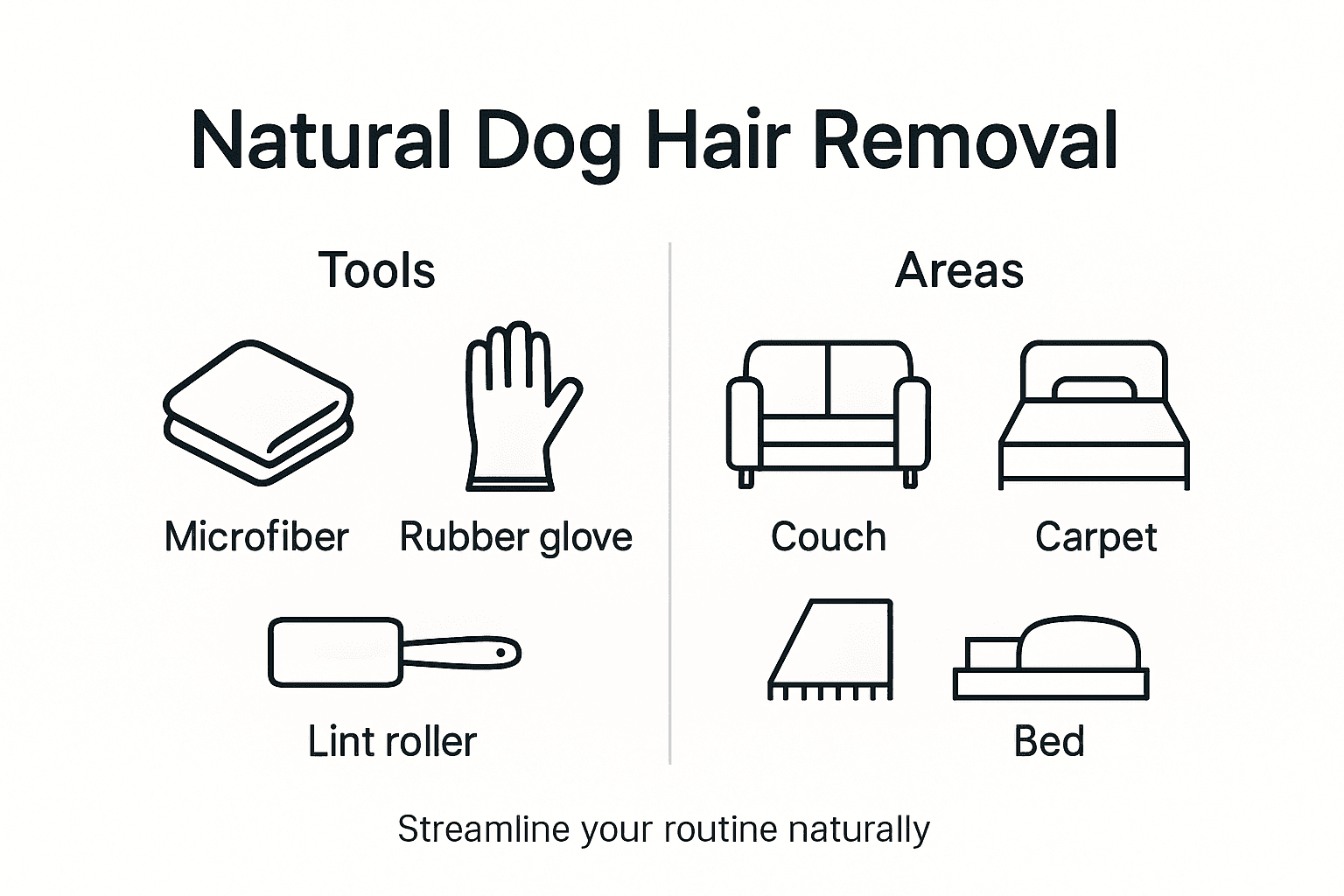
Innovative surface cleaning techniques inspired by natural principles can dramatically reduce pet hair accumulation. Start with a rubber glove or slightly damp squeegee technique that creates static electricity to lift hair from fabrics and furniture. Wear the rubber glove and run your hand across surfaces in one consistent direction this generates enough friction to attract and collect loose fur. For hardwood and tile surfaces use a microfiber mop lightly spritzed with white vinegar to attract and trap hair without spreading it around.
Pet hair can be repurposed through creative composting methods instead of simply discarding it. After collecting hair from your surfaces gather the accumulated fur and consider using it as garden mulch which can help deter pests and provide natural ground cover. Wool dryer sheets also work exceptionally well for quick hair removal on furniture and clothing the static charge helps lift hair efficiently without leaving residue.
Pro tip: Wear light colored clothing when removing pet hair to easily spot and remove stray fur during the cleaning process.
Compare key natural hair-removal methods and their ideal uses:
| Method | Best For | Limitation |
|---|---|---|
| Outdoor brushing | Preventing indoor fur | Weather-dependent, needs space |
| Microfiber mopping | Hard flooring | Less effective on carpets |
| Rubber glove technique | Sofas and upholstery | Not suited for large floor spaces |
| Pet hair composting | Garden mulch | Not all fur types compost well |
Step 5: Check results and refresh as needed for winter
Monitoring your pet hair removal strategy requires consistent evaluation and adaptation, especially during the challenging winter months when indoor shedding patterns can change dramatically. Your goal is to maintain a clean home while keeping your dog comfortable and healthy throughout the season.
Winter grooming demands careful attention to your dog’s changing coat and indoor hair accumulation. Pay close attention to areas where fur tends to collect most frequently such as furniture corners, hallway runners, and your dog’s favorite resting spots. Conduct weekly inspections using your natural hair removal tools checking for any buildup that might have escaped previous cleaning sessions. Adjust your brushing frequency based on how quickly hair accumulates seasonally some dogs develop thicker winter coats that require more frequent grooming.
Maintaining your home’s humidity and your pet’s skin health can significantly reduce excessive shedding during winter months. Use a small humidifier in rooms where your dog spends most time to prevent dry skin which can trigger increased hair loss. Watch for changes in your dog’s coat texture or excessive scratching these might indicate a need to modify your grooming routine or check for potential skin issues that could be contributing to increased hair shedding.
Pro tip: Keep a log of your cleaning sessions and hair removal effectiveness to track seasonal changes and optimize your strategy.
Keep Your Home Fur-Free and Your Dog Comfortable This Season
Struggling with natural ways to remove dog hair while maintaining a cozy and clean home? This article highlights the challenge of managing shedding and keeping indoor spaces fresh using natural tools like microfiber cloths and outdoor grooming routines. To take your pet care to the next level, explore our Pet Wellness Supplements for Dogs & Cats – Furfamilyclub. These supplements support your dog’s skin and coat health, reducing excessive shedding from the inside out.

Don’t let loose hair disrupt your daily comfort or damage your home environment. Visit FurFamilyClub for premium grooming tools, seasonal apparel, and accessories designed to protect your pet and your space. Act now to combine natural hair removal tips with quality products that keep your dog stylish and your home clean all year round.
Frequently Asked Questions
How can I gather natural cleaning tools to remove dog hair effectively?
To effectively remove dog hair, start by gathering essential natural cleaning tools such as microfiber cloths, rubber gloves or a squeegee, white vinegar, and baking soda. Collect multiple microfiber cloths in different sizes to trap hair and dust without chemicals and keep a spray bottle ready with a vinegar solution for stubborn hair.
What steps should I take to prepare my home for effective dog hair removal?
Establish designated pet zones and use washable furniture covers to control hair spread, making cleaning easier. Set up cleaning stations throughout your home with lint rollers and microfiber cloths readily available to quickly tackle hair accumulation as soon as it appears.
How can I minimize indoor dog hair through outdoor grooming?
Brush your dog outdoors to significantly reduce indoor hair accumulation, ideally two to three times a week during shedding seasons. Choose a location with minimal wind, use an appropriate brush for your dog’s coat, and be sure to collect the hair in a trash bag immediately to prevent it from blowing away.
What natural methods are effective for removing dog hair from surfaces?
Utilize natural methods like wearing rubber gloves to create static electricity, which lifts hair from furniture, or using a damp squeegee on surfaces. Microfiber mops are also effective on hard flooring, but won’t work as well on carpets, so focus on removing hair promptly with these tools.
How can I adapt my pet hair removal routine during the winter months?
Monitor your dog’s coat changes during winter and inspect your home weekly for hair buildup, especially in furniture corners. Adjust your grooming frequency to match your dog’s shedding patterns, and consider using a humidifier to prevent dry skin, which can lead to increased hair loss.
What can I do with the collected dog hair after cleaning?
After collecting dog hair, consider repurposing it as garden mulch to deter pests and provide natural ground cover. This creative use helps minimize waste and recycles the fur beneficially in your garden.


