

Dog Grooming Tools Explained: Winter Comfort Essentials
Finding grooming tools that work for an urban dog in a freezing winter can feel like searching for a needle in a haystack. Many American pet owners discover that over half of grooming issues in cold weather come down to using the wrong tools. The right brush or trimmer not only maintains your dog’s comfort but also protects against the harsh effects of snow and salt. If you want your dog to look sharp and stay healthy all season, stylish and reliable grooming solutions are a must.
Table of Contents
- What Are Dog Grooming Tools Used For?
- Major Types Of Dog Grooming Tools
- Features That Matter For Winter Grooming
- How To Use Grooming Tools Safely
- Common Mistakes When Grooming In Winter
Key Takeaways
| Point | Details |
|---|---|
| Importance of Grooming Tools | Dog grooming tools are essential for maintaining a dog’s health, appearance, and overall wellbeing. Proper grooming helps prevent skin issues and promotes comfort. |
| Winter Grooming Considerations | Specialized grooming techniques are necessary during winter to protect your dog’s coat and skin from harsh weather conditions. Regular grooming is crucial to avoid moisture trap and irritation. |
| Safety in Grooming | Using grooming tools safely involves proper technique and maintaining equipment. A calm environment and sharp tools help ensure a stress-free grooming experience for both the pet and the groomer. |
| Common Mistakes to Avoid | Owners often neglect grooming during winter, assume longer fur provides protection, and over-bathe their dogs, which can lead to skin issues. A consistent grooming routine focused on coat health is essential. |
What Are Dog Grooming Tools Used For?
Dog grooming tools are specialized instruments designed to maintain your pet’s physical health, appearance, and overall wellness. Professional groomers use essential equipment to address specific needs related to coat maintenance, hygiene, and potential health monitoring.
These tools serve multiple critical functions beyond simple aesthetic purposes. Brushes help remove loose hair, prevent matting, and distribute natural skin oils across the coat. Nail trimmers are crucial for preventing overgrowth that can cause painful walking and potential joint issues. Specialized combs and detangling tools work to eliminate knots and reduce shedding, which is especially important for long-haired and double-coated dog breeds.
Grooming isn’t just about looks - it’s a comprehensive health check. Professional groomers can detect early signs of skin problems, lumps, parasites, or infections during thorough grooming sessions. Different dogs require different grooming approaches based on their breed, coat type, and individual needs. Short-haired breeds might need minimal maintenance, while long-haired dogs demand more frequent and intensive grooming routines.
Pro tip: Invest in breed-specific grooming tools and establish a consistent grooming routine to catch potential health issues early and keep your dog comfortable during winter months.
Major Types Of Dog Grooming Tools
Professional dog grooming requires a comprehensive set of specialized tools designed to address different aspects of canine care and maintenance. Essential grooming tools encompass multiple categories that range from coat maintenance to precision trimming and overall hygiene management.
Brushing and combing tools form the first critical category of grooming equipment. These include slicker brushes for detangling, pin brushes for long-haired breeds, steel combs for fine grooming, and specialized undercoat rakes for dogs with thick double coats. Nail trimmers represent another crucial tool, helping prevent overgrowth and potential walking discomfort. Clipper systems with interchangeable blades allow groomers to handle various coat lengths and styles efficiently, ensuring breed-appropriate trimming.
Additional essential grooming tools include professional-grade equipment like adjustable grooming tables that provide stable work surfaces, high-velocity dryers for quick and thorough coat drying, and precision grooming shears. Straight, curved, and thinning shears enable detailed coat shaping and styling. Ear and eye care products round out the professional grooming toolkit, allowing comprehensive pet maintenance and early detection of potential health issues.
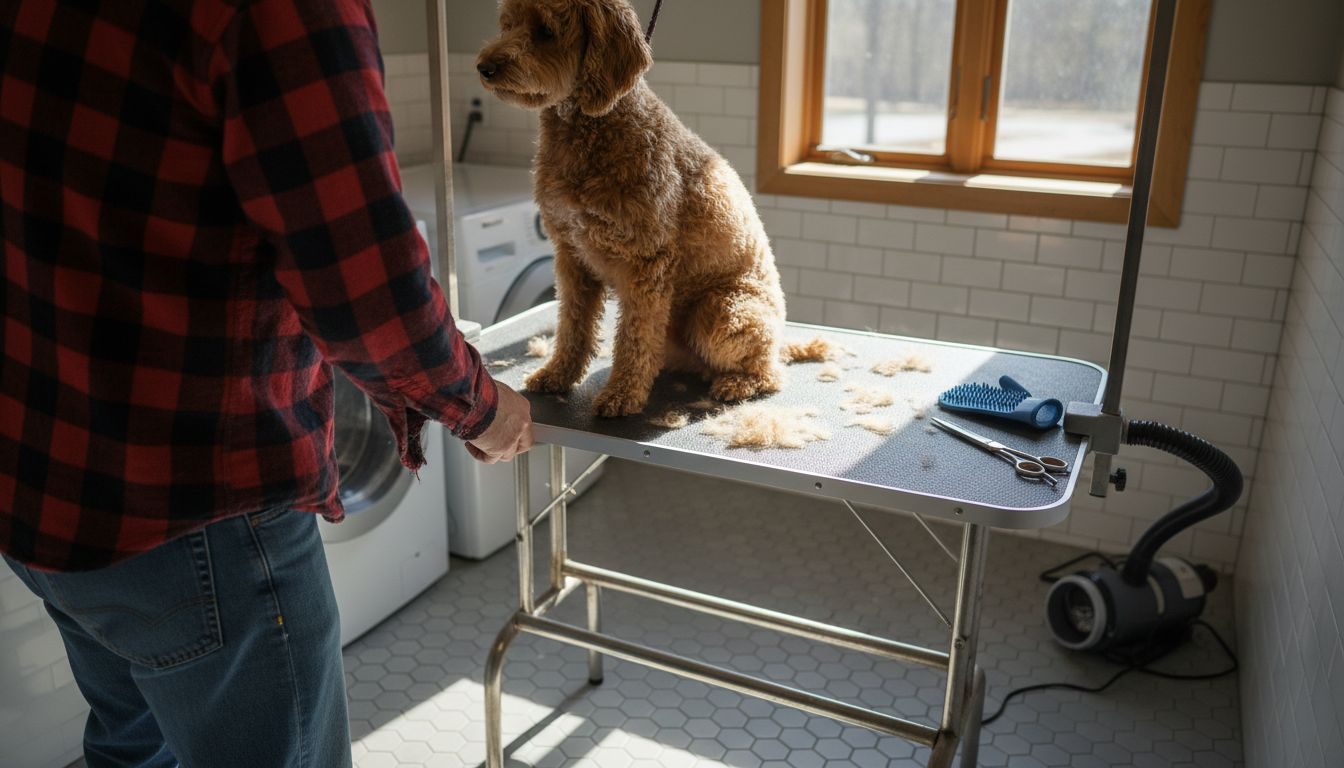
Pro tip: Invest in quality, multipurpose grooming tools that can handle different coat types and learn proper technique to make grooming a comfortable experience for your dog.
Here’s a quick overview of major dog grooming tool categories and their key benefits:
| Tool Category | Typical Use | Key Benefit | Example Breed |
|---|---|---|---|
| Brushes & Combs | Coat detangling | Prevent mats and shedding | Golden Retriever |
| Nail Trimmers | Nail shortening | Comfort and joint health | Boxer |
| Clippers & Shears | Hair cutting | Breed-specific styling | Poodle |
| Dryers & Tables | Coat drying/setup | Safe, efficient grooming | Any breed |
Features That Matter For Winter Grooming
Winter dog grooming requires specialized techniques and tools that protect your pet’s coat and skin from harsh cold weather conditions. Winter grooming focuses on maintaining coat health and preventing moisture-related complications that can compromise your dog’s comfort and warmth.
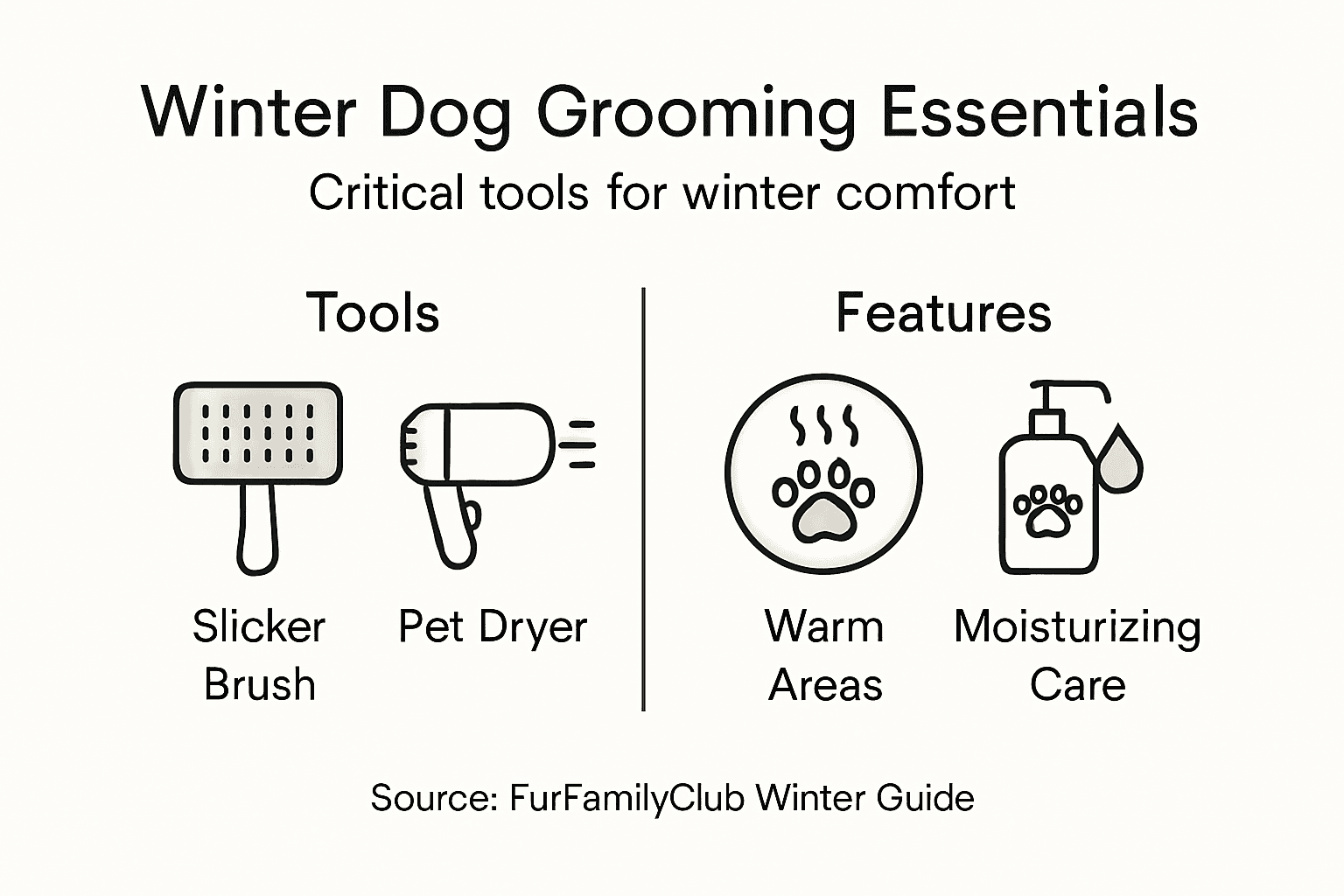
The primary features to consider include coat maintenance tools that preserve the natural insulation layer. Slicker brushes with gentle bristles help remove tangles without damaging the protective undercoat, which is critical for maintaining body heat. Moisturizing shampoos and conditioners become essential during winter, combating the drying effects of indoor heating and cold outdoor temperatures. Special attention must be paid to paw care, including trimming fur between paw pads to prevent snow and ice buildup, and applying protective balms to shield against salt and harsh surfaces.
Drying techniques are equally important during winter grooming. Using a pet dryer on a warm setting ensures the coat is completely dry, preventing potential skin infections and chills. Ear care becomes crucial, with thorough drying to prevent moisture-related complications. Professional-grade grooming tools should be selected to reach deep into the undercoat, lifting and separating hair without compromising the natural protective layer that helps dogs regulate body temperature in cold weather.
Pro tip: Invest in a high-quality, adjustable pet dryer and create a warm, draft-free grooming area to make winter coat maintenance comfortable and efficient for both you and your dog.
Compare winter grooming needs at a glance for long-haired and short-haired dogs:
| Feature | Long-Haired Dogs | Short-Haired Dogs |
|---|---|---|
| Brushing Frequency | Daily or every other day | Weekly |
| Moisture Risk | High (traps moisture easily) | Moderate |
| Paw Maintenance | Trim pad fur, balm essential | Clean pads, balm suggested |
| Drying Importance | Must ensure full coat dryness | Focus mainly after bathing |
How To Use Grooming Tools Safely
Safe dog grooming begins with understanding proper handling techniques and selecting appropriate tools for your specific pet’s needs. Dog grooming tools require careful and methodical approach to prevent potential injuries and ensure a comfortable experience for both you and your dog.
When using scissors and clippers, stabilization is key. Create a calm environment with a non-slip surface, and ensure your dog is relaxed before beginning. Choose blunt-tip scissors for sensitive areas, and always cut away from the skin. For electric clippers, maintain low heat settings and avoid clipping over skin folds or wet fur. Professional groomers recommend using adjustable grooming tables with restraints to prevent sudden movements that could cause accidental cuts or stress to the animal.
Maintaining your grooming tools is equally important for safety. Keep scissors and clippers sharp and clean, as dull blades can pull hair and cause discomfort. Regularly inspect tools for damage, and replace blades or entire tools when they show signs of wear. Always have a first aid kit nearby, and take breaks if your dog becomes anxious or restless. Understanding your pet’s body language and tolerance level will help you groom more effectively and safely.
Pro tip: Practice handling grooming tools with your dog during calm, relaxed moments to build trust and reduce anxiety during actual grooming sessions.
Common Mistakes When Grooming In Winter
Winter dog grooming requires careful attention to prevent common mistakes that can compromise your pet’s health and comfort. Winter grooming mistakes can seriously impact dog wellness and potentially lead to long-term skin and coat problems.
One of the most significant errors pet owners make is neglecting regular grooming during cold months, assuming longer fur automatically provides adequate protection. Contrary to popular belief, an unmanaged coat can trap moisture, leading to skin irritation and potential infections. Owners often over-bathe their dogs, stripping essential natural oils and causing dry, itchy skin. Another critical mistake is shaving dogs’ coats too short, which removes crucial insulation and exposes sensitive skin to harsh winter conditions. This can make dogs more susceptible to cold and potential health complications.
Paw care is another frequently overlooked aspect of winter grooming. Failing to clean and protect paws from salt, ice, and cold surfaces can result in cracked pads, potential infections, and significant discomfort for your dog. Improper drying after outdoor walks or baths can also increase the risk of chills and skin problems. Dogs should always be thoroughly dried with warm towels or a pet dryer, paying special attention to areas prone to moisture retention like between paw pads and under the belly.
Pro tip: Develop a consistent winter grooming routine that focuses on maintaining coat health, protecting paws, and keeping your dog completely dry after outdoor activities.
Keep Your Dog Cozy and Healthy This Winter With the Right Grooming and Wellness Essentials
Winter grooming can be a challenge when it comes to protecting your dog from cold weather while maintaining their skin and coat health. This article highlights key concerns such as proper coat maintenance, preventing moisture buildup, and safe grooming techniques to avoid discomfort or injury. Addressing these pain points ensures your dog stays comfortable through chilly months and avoids common winter grooming mistakes like over-bathing or insufficient paw care.
To help you tackle these grooming challenges effectively, explore our carefully selected range of Pet Wellness Supplements for Dogs & Cats designed to support your pet’s skin and immune health during winter.

Start enhancing your dog’s winter comfort today by visiting FurFamilyClub for premium grooming tools, nourishing wellness products, and practical cold-weather gear. Give your dog the cozy care they deserve through every season. Shop now and make winter grooming easier and safer for both you and your furry friend.
Frequently Asked Questions
What are the essential dog grooming tools for winter?
Essential dog grooming tools for winter include slicker brushes for detangling, moisturizing shampoos and conditioners to combat dryness, paw trimmers for removing fur between pads, and high-quality dryers to ensure thorough drying.
How often should I groom my dog in winter?
Long-haired dogs should be groomed daily or every other day, while short-haired dogs typically require grooming weekly to maintain coat health and prevent moisture issues.
What mistakes should I avoid while grooming my dog in winter?
Common mistakes include neglecting regular grooming, over-bathing which strips natural oils, shaving coats too short, and failing to protect and dry paws after outdoor activities.
How can I safely use grooming tools on my dog?
To use grooming tools safely, create a calm environment, use non-slip surfaces, choose blunt-tip scissors for sensitive areas, ensure tools are sharp and clean, and watch for your dog’s body language to avoid stress.


