

Dog Coat Types Explained: Choosing for Winter Comfort
Finding a winter coat for your dog can feel overwhelming when the weather turns icy in American cities. Urban pet owners quickly learn that not all dogs are built for harsh cold, with over 60% of short-haired breeds needing extra insulation during winter months. Understanding your dog’s unique coat type is the secret to matching their comfort with style and warmth. This guide spotlights what matters most when choosing durable, fashionable dog coats to keep your furry companion protected throughout the season.
Table of Contents
- What Is A Dog Coat Type?
- Recognizing Major Dog Coat Categories
- Key Features Of Popular Coat Types
- Winter Comfort And Coat Type Impact
- Caring For Different Coats In Cold Weather
- Choosing The Best Winter Apparel For Your Dog
Key Takeaways
| Point | Details |
|---|---|
| Understanding Coat Types | Dog coat types comprise single and double layers, crucial for insulation and protection against environmental conditions. Owners should assess their dog’s coat to select appropriate winter apparel. |
| Coat Characteristics Impact Care | Different coat types influence grooming needs and winter protection requirements, emphasizing the need for tailored care strategies. Consider individual dog’s physiology when planning winter protection. |
| Choosing Appropriate Apparel | When selecting winter gear, match the coat type and specific dog characteristics to ensure proper fit, warmth, and mobility. Features like insulation level and adjustability are vital. |
| Monitoring Winter Comfort | Observe your dog’s behavior in cold weather, adjusting protective measures based on signs of discomfort to prevent cold-related health risks. |
What Is a Dog Coat Type?
A dog coat type refers to the distinctive characteristics of a dog’s fur covering, which determines how well the animal handles different environmental conditions. Dogs have evolved diverse coat types that serve critical functions beyond simple appearance, providing protection, temperature regulation, and environmental adaptation. Understanding these genetic variations helps owners select appropriate winter apparel and comprehend their pet’s natural insulation capabilities.
Dog coats fundamentally consist of two primary layers: the topcoat and the undercoat. The topcoat contains stiff, protective guard hairs that repel moisture and dirt, while the undercoat provides crucial insulation by trapping warm air close to the skin. Some dogs have a single coat with only guard hairs, whereas double-coated breeds possess both layers, offering superior cold weather protection. Genetic inheritance plays a significant role in determining these coat characteristics, with specific gene expressions controlling length, texture, and density.
The complexity of dog coat types extends beyond simple categorizations. Breeds exhibit remarkable variations including curly, straight, long, short, dense, and sparse coats. These variations result from intricate genetic interactions that have been shaped through centuries of selective breeding. Factors like climate origin, intended working purpose, and breed standards have influenced the development of distinct coat types across different dog breeds.
Pro tip: When selecting winter dog gear, always match the coat type with appropriate clothing thickness to ensure maximum comfort and thermal regulation.
Recognizing Major Dog Coat Categories
Dog coat categories represent critical variations in fur structure that significantly impact a dog’s ability to regulate temperature and withstand different environmental conditions. Major coat classifications typically encompass single and double coat types, each with unique characteristics that determine the animal’s thermal protection and maintenance requirements. These categories are essential for understanding breed-specific needs and selecting appropriate winter gear.
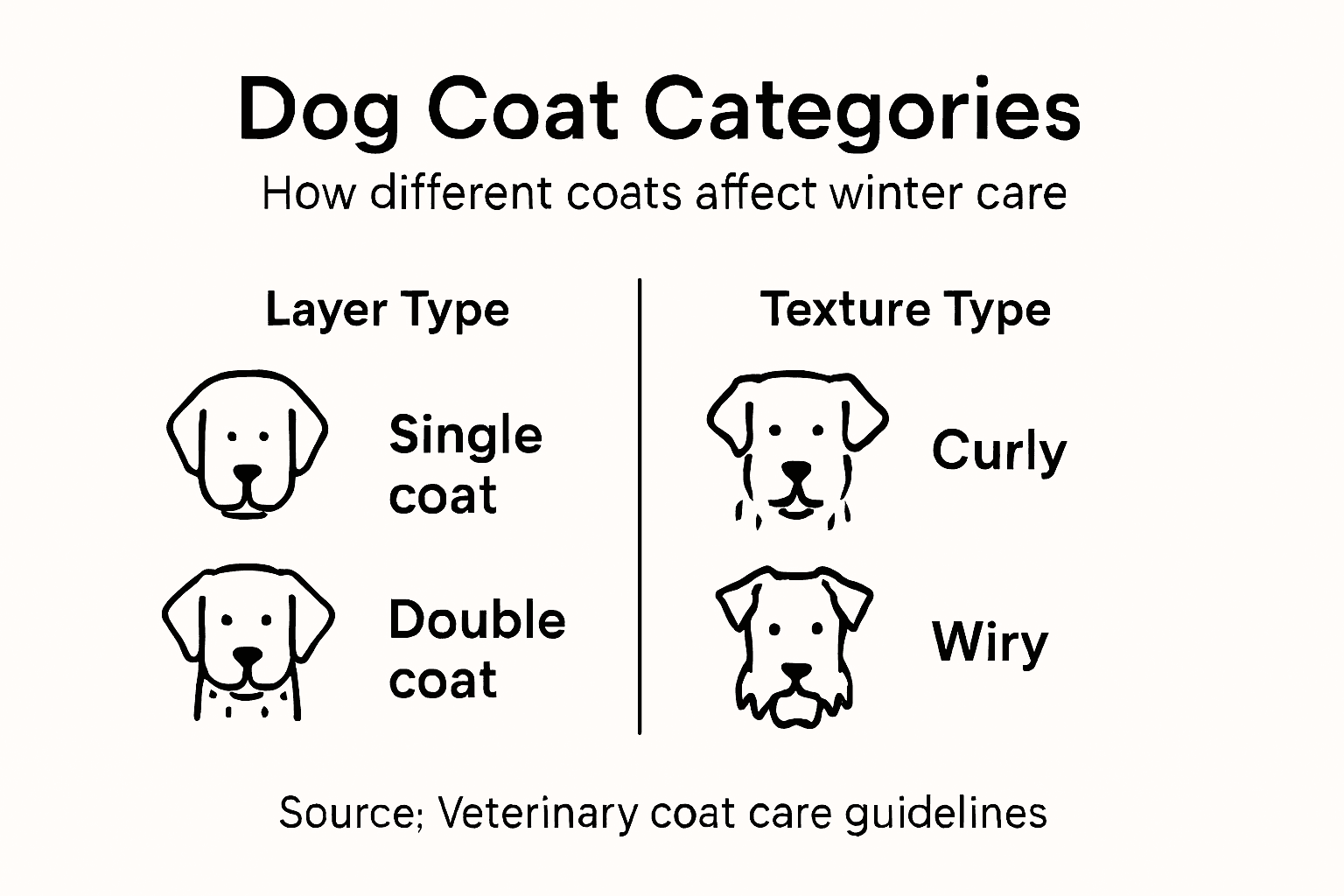
The primary coat categories include single coats, double coats, and several distinctive textures such as smooth, wire, curly, and silky. Single-coated dogs have only guard hairs with minimal undercoat protection, making them more vulnerable to temperature extremes. Double-coated breeds, by contrast, feature a dense undercoat beneath longer guard hairs, providing superior insulation. International breed classifications often highlight these coat distinctions, particularly in working and sporting dog groups like Spitz, Retrievers, and Mountain dog breeds.
Breed-specific coat types emerge from complex genetic interactions shaped by environmental adaptation and selective breeding. Coat density, length, and texture vary dramatically across breeds, reflecting their historical origins and intended purposes. Some coats evolved for arctic environments, while others developed for humid or temperate regions. These variations mean that not all dogs require the same level of winter protection, making individual coat assessment crucial for proper winter care.
Pro tip: Always examine your dog’s natural coat characteristics before purchasing winter apparel to ensure optimal fit and thermal regulation.
Key Features of Popular Coat Types
Understanding the unique characteristics of different dog coat types is crucial for providing optimal winter care and protection. Popular coat types showcase remarkable diversity, ranging from dense double coats to sleek single-layer varieties that each serve distinct functional purposes. These coat variations reflect complex evolutionary adaptations that help dogs survive in various environmental conditions.
The primary coat types include double coats, single coats, wiry coats, and curly coats, each presenting distinctive features. Double-coated breeds like Siberian Huskies and German Shepherds possess a thick undercoat that provides exceptional thermal insulation, with guard hairs that repel moisture and protect against wind. Furry coat characteristics reveal that silky coats typically have smooth, glossy fur requiring meticulous grooming, while curly coats offer unique benefits such as reduced shedding and potential hypoallergenic properties.
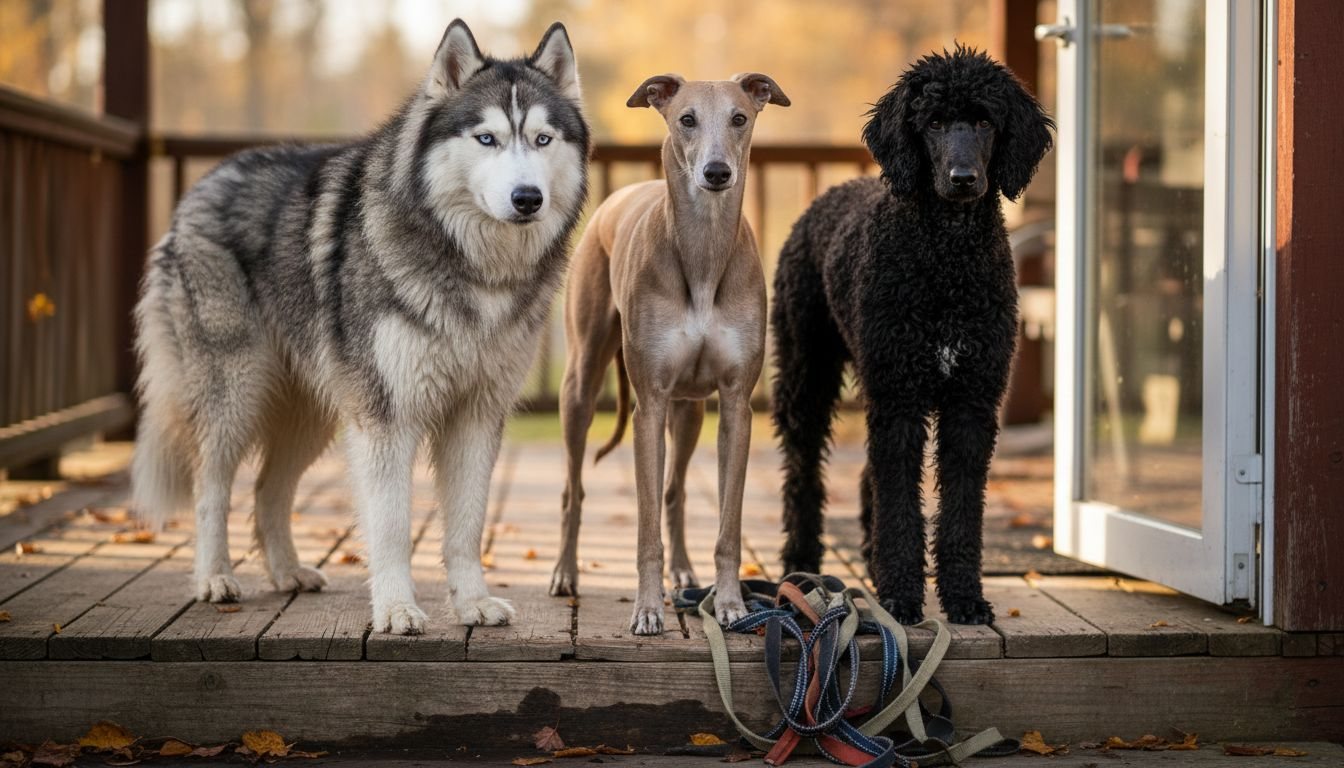
Coat type directly influences a dog’s temperature regulation, grooming needs, and overall comfort. Wiry-coated breeds often have resilient fur that protects against harsh weather conditions, while breeds with thin, single coats might require additional winter protection. The intricate relationship between coat structure and environmental adaptation means that not all dogs are equally equipped to handle cold temperatures, making individual coat assessment critical for selecting appropriate winter gear.
Here’s a comparison of major dog coat types and their winter care needs:
| Coat Type | Winter Protection Needs | Typical Breeds | Grooming Frequency |
|---|---|---|---|
| Double Coat | Minimal for mild cold, monitor in extremes | Siberian Husky, German Shepherd | Weekly brushing |
| Single Coat | Requires full insulated jacket | Greyhound, Boxer | Regular brushing |
| Curly Coat | Light insulation, jacket in harsh cold | Poodle, Bichon Frise | Frequent grooming |
| Wiry Coat | Moderate protection, insulated jacket in cold | Terrier breeds | Regular stripping and brushing |
Pro tip: Consult with a veterinarian or professional groomer to accurately determine your dog’s specific coat type and corresponding winter care requirements.
Winter Comfort and Coat Type Impact
Understanding how coat type influences winter comfort is critical for protecting dogs from cold-related health risks. Winter coat tolerance varies dramatically across different breeds, with some dogs naturally equipped to handle freezing temperatures while others require significant additional protection. The intricate relationship between coat structure and temperature regulation determines a dog’s ability to maintain body heat and prevent hypothermia.
Northern breeds with dense double coats, such as Siberian Huskies and Alaskan Malamutes, possess remarkable natural insulation that allows them to thrive in extremely cold environments. Conversely, dog cold tolerance depends on multiple factors including coat thickness, body size, age, and overall health. Small breeds, short-haired dogs, senior dogs, and puppies are particularly vulnerable to temperature drops and may require specialized winter gear to maintain core body temperature and prevent cold stress.
Coat type directly impacts a dog’s thermal regulation mechanism. Thick double-coated breeds have an exceptional undercoat that traps warm air close to the skin, creating a natural barrier against cold. Single-coated or thin-haired dogs lose body heat rapidly, making them susceptible to hypothermia even in moderately cool temperatures. This variability means that winter protection strategies must be tailored to each dog’s specific coat characteristics, taking into account their individual physiological needs and environmental exposure.
Pro tip: Monitor your dog’s behavior and physical signs during winter walks, and adjust protection based on shivering, reluctance to move, or lifting paws off cold surfaces.
Caring for Different Coats in Cold Weather
Winter coat maintenance requires a nuanced approach that considers each dog’s unique physiological needs and coat characteristics. Different coat types demand specialized care strategies to ensure optimal protection and comfort during cold weather. Understanding these variations helps dog owners provide targeted winter support that maintains their pet’s health and prevents temperature-related stress.
Double-coated breeds like Huskies and German Shepherds have natural insulation but still require careful monitoring during extreme temperatures. Single-coated and short-haired dogs are more vulnerable and often need supplemental protection. Winter gear recommendations emphasize the importance of properly fitted jackets that provide warmth without restricting movement. Puppy and senior dogs, with their less robust temperature regulation, need extra attention to prevent hypothermia and maintain core body heat.
Effective cold weather care extends beyond clothing to include comprehensive protective strategies. This involves managing exposure time during extreme temperatures, protecting sensitive paw pads from ice and salt, and ensuring dogs are thoroughly dried after snow or rain exposure. Grooming plays a critical role in coat maintenance, with regular brushing helping to preserve the natural insulating properties of both single and double-coated breeds. Different coat types require specific grooming approaches to maintain their protective qualities and overall health.
Pro tip: Invest in breathable, adjustable winter gear that can be layered according to temperature fluctuations and your dog’s specific coat type.
Choosing the Best Winter Apparel for Your Dog
Selecting the ideal winter apparel requires careful consideration of your dog’s unique physical characteristics and environmental needs. Winter gear selection involves analyzing multiple factors including breed, coat type, activity level, and individual health conditions. The right winter jacket can provide crucial protection while ensuring your dog remains comfortable and mobile during cold weather adventures.
Different coat types demand specialized apparel approaches. Short-haired and single-coated dogs benefit most from fully insulated jackets with comprehensive coverage, while double-coated breeds typically require minimal additional protection. Key considerations include jacket material flexibility, thermal insulation properties, and range of motion allowance. Look for features like adjustable straps, water-resistant fabrics, and reflective elements that enhance visibility during darker winter months.
The perfect winter apparel goes beyond simple warmth. It should complement your dog’s natural coat characteristics while addressing specific environmental challenges. Breeds with thin skin or limited natural insulation need more robust protection, whereas thick-coated dogs might only require light coverage during extreme temperatures. Measure your dog carefully, considering chest girth, back length, and neck circumference to ensure a precise fit that prevents heat loss without restricting movement.
This reference table highlights key considerations for choosing winter gear based on dog characteristics:
| Dog Factor | Apparel Feature to Prioritize | Reason |
|---|---|---|
| Short-haired breed | Thick insulation, full coverage | Low natural protection |
| Senior or puppy | Easy to put on, extra warmth | Less body heat retention |
| Large, active dog | Flexible material, durability | Freedom to move |
| Night walks | Reflective elements, water-resistant | Safety and weather |
Pro tip: Always test winter apparel at home first, observing your dog’s comfort and mobility before venturing outdoors in cold conditions.
Keep Your Dog Cozy This Winter With the Right Gear
Choosing the perfect winter apparel for your dog starts with understanding their unique coat type and winter comfort needs. Whether your dog has a thick double coat or a sleek single coat, finding gear that complements their natural insulation is key to protecting them from cold weather challenges like hypothermia and discomfort. At FurFamilyClub, we offer a wide selection of winter jackets, sweaters, and hoodies designed to suit all coat types and activity levels while keeping your furry friend warm and mobile.

Explore our Pet Wellness Supplements for Dogs & Cats – Furfamilyclub to support your dog’s health during chilly months. Discover carefully crafted winter gear that fits perfectly and offers breathable, insulated protection tailored for dogs with varied coat characteristics. Visit FurFamilyClub now and find stylish, functional pieces to keep your dog comfortable all winter long.
Frequently Asked Questions
What are the different types of dog coats?
Dog coats can be categorized primarily into single coats and double coats. Single coats consist of guard hairs with minimal insulation, while double coats have both an undercoat and guard hairs, providing superior insulation and temperature regulation.
How can I determine my dog’s coat type?
You can determine your dog’s coat type by examining the structure and layers of their fur. If your dog has a thick undercoat beneath longer guard hairs, it is likely a double-coated breed. Conversely, breeds with only guard hairs typically fall into the single coat category.
What should I consider when choosing winter apparel for my dog?
When selecting winter apparel, consider your dog’s coat type, size, activity level, and specific health needs. Look for jackets that provide the right insulation while allowing freedom of movement. Adjustable straps and water-resistant materials are also essential features to ensure comfort and protection.
How do I care for my dog’s coat in cold weather?
To care for your dog’s coat in cold weather, regularly brush your dog’s fur to maintain its insulating properties. Ensure that your dog stays dry and monitor their time outdoors, especially for short-haired or single-coated breeds that may need additional protection from the cold.


