

What Is Pet Insurance and Why It Matters
Finding reliable protection for your pet’s health is more urgent than ever as veterinary costs climb globally. Urban pet owners from New York to Tokyo now spend over $1200 annually on average for medical emergencies and stylish winter gear. With American families leading trends in functional pet apparel and insurance adoption, the need for smart financial planning is clear. This guide unpacks how pet insurance works and what to compare before choosing coverage for your dog or cat.
Table of Contents
- Defining Pet Insurance For Modern Pet Owners
- Types Of Pet Insurance Plans Explained
- How Pet Insurance Works Day To Day
- What Pet Insurance Typically Covers
- Understanding Costs And Limitations
- Comparing Pet Insurance To Other Options
Key Takeaways
| Point | Details |
|---|---|
| Importance of Pet Insurance | Pet insurance provides essential financial protection for unexpected veterinary expenses, reflecting the growing role of pets as family members. |
| Types of Coverage | There are three main types of pet insurance: accident-only, accident and illness, and comprehensive wellness plans, each tailored to different needs. |
| Claims Process | Pet insurance operates on a reimbursement model, requiring owners to pay vet bills upfront before seeking reimbursement based on their policy. |
| Financial Considerations | Premiums vary based on factors like pet age and breed, highlighting the importance of evaluating potential costs against policy benefits. |
Defining Pet Insurance for Modern Pet Owners
Pet insurance represents a crucial financial safety net for pet owners navigating the increasingly complex world of veterinary healthcare. Unlike traditional human health insurance, pet insurance offers a specialized approach to managing unexpected medical expenses for dogs, cats, and other companion animals. Pet insurance policies help cover veterinary costs for illness or injury, providing pet owners with financial protection and peace of mind.
Typically, pet insurance products fall into three primary coverage categories: accident-only, accident and illness, and comprehensive wellness plans. Each type offers different levels of protection, ranging from emergency medical interventions to routine preventative care. Most policies include specific features like deductibles, annual limits, and reimbursement percentages that allow pet owners to customize their coverage. Important exclusions often include pre-existing conditions, certain hereditary diseases, and age-related limitations.
The modern pet insurance landscape reflects a growing recognition of pets as integral family members. As veterinary medical technologies advance and treatment costs escalate, more pet owners are seeking financial strategies to manage potentially expensive healthcare scenarios. The global pet insurance market continues expanding due to increasing veterinary costs and advanced medical treatments, indicating a significant shift in how people perceive and invest in their pets’ health.
Pro tip: Research and compare multiple pet insurance providers, focusing on coverage details, reimbursement rates, and customer reviews before selecting a policy that matches your pet’s specific health needs.
Types of Pet Insurance Plans Explained
Pet insurance offers several distinct coverage options designed to meet the diverse healthcare needs of different pets and their owners. Pet insurance policies generally fall into three primary categories: accident-only, accident and illness, and comprehensive wellness plans, each providing varying levels of financial protection for veterinary expenses.
Accident-Only Plans represent the most basic and budget-friendly insurance option. These plans cover unexpected injuries from accidents like broken bones, cuts, or ingestion of foreign objects, but exclude illnesses and routine preventative care. They are ideal for pet owners seeking minimal financial protection against sudden emergencies. Accident and Illness Plans offer more comprehensive coverage, including both accidental injuries and medical treatments for various illnesses. These plans typically cover chronic conditions, hereditary diseases, and unexpected health issues, making them suitable for pets with higher medical risk profiles.
Comprehensive Wellness Plans provide the most extensive coverage, combining accident and illness protection with routine preventative care. These advanced insurance options often include annual checkups, vaccinations, dental cleanings, and other standard health maintenance procedures. The coverage levels and specific inclusions can vary significantly between providers, so carefully reviewing policy details is crucial for selecting the most appropriate plan for your pet’s unique health requirements.
Pro tip: Consider your pet’s age, breed, and current health status when selecting an insurance plan, and always compare multiple providers to find the most comprehensive coverage at the most competitive price.
Here’s a quick comparison of the main pet insurance plan types and their typical coverage scope:
| Plan Type | Typical Coverage | Best For |
|---|---|---|
| Accident-Only | Emergency injury treatments | Owners seeking basic protection |
| Accident & Illness | Injuries, diseases, surgeries | Pets with moderate health risks |
| Comprehensive Wellness | All above plus routine care | Owners preferring full coverage |
How Pet Insurance Works Day to Day
Pet insurance operates through a straightforward reimbursement model that empowers pet owners to manage unexpected veterinary expenses with greater financial confidence. Most pet insurance policies function by requiring owners to pay veterinary bills upfront and then submit claims for partial or full reimbursement, providing flexibility and control over pet healthcare decisions.

The typical claims process involves several key steps. After receiving veterinary treatment, pet owners pay the full bill and then submit a detailed claim to their insurance provider, including itemized medical records and invoices. Insurance companies typically review these claims and process reimbursements within a week, applying the predetermined percentage based on the specific policy’s coverage level. Deductibles must be met before reimbursement begins, and most policies allow pet owners to visit any licensed veterinarian, offering complete freedom in selecting healthcare providers.
Each pet insurance policy comes with unique parameters that significantly impact day-to-day functionality. These include annual coverage limits, reimbursement percentages (typically ranging from 70% to 90%), and specific waiting periods before coverage activates. Important exclusions usually involve pre-existing conditions, meaning health issues diagnosed before obtaining insurance are not covered. Some policies also differentiate between hereditary conditions, chronic diseases, and acute medical emergencies, each with potentially different coverage terms.
Pro tip: Keep all veterinary receipts and medical records organized digitally, making claim submissions faster and more streamlined during potentially stressful medical situations.
What Pet Insurance Typically Covers
Pet insurance coverage varies significantly across different policy types, designed to address the diverse healthcare needs of pets. Most policies fall into three primary categories: accident-only, accident and illness, and comprehensive wellness plans, each offering distinct levels of financial protection for veterinary expenses.
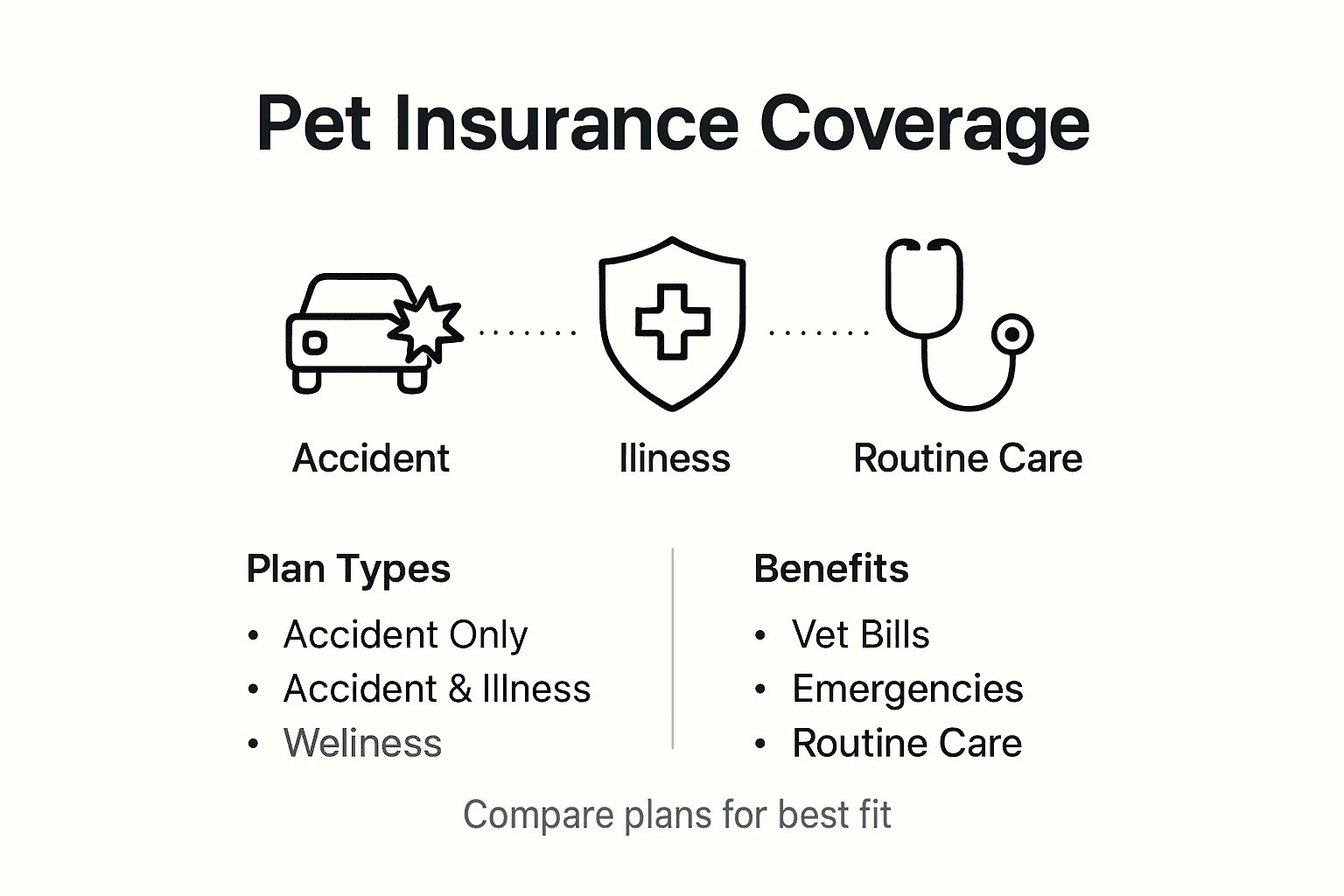
Accident-Only Coverage provides the most basic protection, focusing exclusively on unexpected injuries. These plans typically cover emergency treatments resulting from accidents like broken bones, cuts, foreign object ingestion, and vehicular injuries. In contrast, Accident and Illness Plans offer substantially more comprehensive coverage. These advanced policies include treatment for chronic diseases, hereditary conditions, surgeries, diagnostic tests, prescription medications, and hospitalization expenses. Many plans also cover specialized treatments such as cancer therapies, complex surgical procedures, and ongoing management of genetic health issues.
Comprehensive Wellness Plans represent the most extensive coverage option, integrating accident and illness protection with routine preventative care. These plans often include annual veterinary checkups, vaccinations, dental cleanings, flea and tick prevention, and other standard health maintenance procedures. While specific coverage details vary between insurance providers, most policies exclude pre-existing conditions, cosmetic procedures, and experimental treatments. Pet owners should carefully review policy details to understand exact coverage limits, reimbursement percentages, and potential exclusions that might impact their pet’s healthcare.
Pro tip: Request a detailed breakdown of coverage from potential insurance providers, focusing on specific conditions common to your pet’s breed and age to ensure comprehensive protection.
Understanding Costs and Limitations
Pet insurance costs are influenced by multiple complex factors that determine premium pricing and coverage scope, making it crucial for pet owners to understand the financial nuances of these policies. The pricing structure varies dramatically based on pet characteristics such as age, breed, health status, and geographic location, with premiums typically increasing as pets grow older.
Deductible Structures play a significant role in determining out-of-pocket expenses. Pet owners can usually choose between annual deductibles or per-incident deductibles, each affecting the overall cost and reimbursement potential. Annual deductibles require pet owners to pay a set amount before insurance coverage activates, while per-incident deductibles reset for each new medical condition. Reimbursement levels typically range from 70% to 90% of eligible veterinary expenses, with some plans offering more flexible options that allow owners to customize their coverage percentages.
Important financial limitations exist within most pet insurance policies. The rising costs of veterinary care and advanced medical treatments have significantly impacted insurance premiums, creating potential affordability challenges for pet owners. Policies often include specific exclusions such as pre-existing conditions, routine preventative care, and experimental treatments. Some plans also implement waiting periods before coverage becomes active, which means pet owners cannot immediately claim expenses for certain medical conditions after purchasing a policy.
Pro tip: Calculate your potential annual veterinary expenses and compare them against insurance premiums to determine whether a policy offers genuine financial value for your specific pet’s health needs.
This table summarizes key factors impacting pet insurance cost and coverage eligibility:
| Factor | Impact on Premiums | Coverage Implications |
|---|---|---|
| Age | Older pets cost more | May face restrictions |
| Breed | High-risk breeds cost more | Some genetic issues may be excluded |
| Location | Urban areas often costlier | Varies by region and provider |
| Pre-existing Condition | Increases risk, often excluded | Not reimbursed by most policies |
Comparing Pet Insurance to Other Options
Pet insurance represents a specialized financial strategy within the broader landscape of pet care expenditures, offering unique advantages and limitations compared to alternative approaches for managing veterinary expenses. Unlike traditional out-of-pocket payment methods, pet insurance provides a structured mechanism for mitigating unexpected medical costs while distributing financial risk across a broader population of pet owners.
Alternative Financial Approaches to managing pet healthcare expenses include personal savings accounts, credit cards, veterinary payment plans, and employer-sponsored benefits. Personal savings require consistent discipline and may be insufficient during catastrophic medical events. Credit cards often come with high interest rates, while veterinary payment plans can be restrictive and may not cover comprehensive medical treatments. Some forward-thinking employers now offer pet insurance as an optional voluntary benefit, recognizing the growing importance of pet healthcare in employees’ lives.
Comprehensive Comparison reveals that pet insurance plays a complementary role alongside other pet care expenditures like nutrition, preventative care, grooming, and wellness services. Unlike one-time purchases or singular service options, insurance transfers a significant portion of financial risk, providing peace of mind during unexpected medical situations. The primary distinction lies in its proactive approach to potential healthcare expenses, offering financial protection that savings accounts or payment plans cannot consistently guarantee. Despite lower market penetration compared to total pet ownership, pet insurance continues to grow as veterinary costs escalate and pet owners seek more comprehensive financial protection.
Pro tip: Evaluate your pet’s specific health risks, breed predispositions, and potential medical expenses before selecting an insurance strategy, considering both traditional and emerging financial protection options.
Protect Your Pet’s Health and Comfort All Year Long
Understanding the importance of pet insurance highlights the challenges of managing unexpected veterinary costs and ensuring your pet’s well-being. While insurance safeguards your pet’s health against unforeseen illnesses and injuries, providing financial peace of mind, it’s equally vital to keep your pet comfortable and safe every day, especially during cold weather and holiday seasons. This is where quality pet apparel and accessories play a crucial role in supporting your pet’s overall health and happiness.

Discover premium winter jackets, cozy sweaters, and practical outdoor gear designed specifically to protect your dog or cat from harsh weather while enhancing their comfort. Shop now at FurFamilyClub to find stylish, functional pieces that complement the care you provide through pet insurance. Don’t wait for unexpected emergencies to act—prepare your pet today for every season with our carefully curated collection of warm apparel and accessories. Visit FurFamilyClub and experience how quality gear works hand in hand with medical protection to keep your furry family member safe and joyful.
Frequently Asked Questions
What is pet insurance?
Pet insurance is a form of financial protection for pet owners, designed to help manage unexpected veterinary expenses resulting from accidents or illnesses.
What types of pet insurance plans are available?
There are three main types of pet insurance plans: accident-only plans, accident and illness plans, and comprehensive wellness plans. Each offers varying levels of coverage depending on your pet’s health needs.
How does pet insurance work?
Most pet insurance policies require pet owners to pay veterinary bills upfront and then submit claims for reimbursement. This model allows flexibility in choosing healthcare providers while managing costs.
What does pet insurance typically cover?
Coverage varies by policy type, but generally includes accident-related treatments for injuries, illnesses, surgeries, and in some cases, routine preventative care, such as vaccinations and annual checkups.
Recommended
- Pet Grooming & Health Guide | Complete Home Care for Dogs & Cats – Furfamilyclub
- Winter Warmth for Pets | Best Winter Products for Dogs & Cats – Furfamilyclub
- Pet Cameras Guide | Furfamilyclub — High-Quality, Secure Options for Pets
- Pet Tech & Smart Gadgets for Dogs & Cats Smart Pet Care |FurFamilyClub – Furfamilyclub
- What is Kibble? Understanding Dog Food Choices – Ultimate Pet Foods


