

How to Clean Dog Toys Naturally for Winter Longevity
Over 65 percent of American urban dog owners report their pets’ toys get especially grimy during winter months. Longer indoor hours and wet, salty streets mean those beloved chew ropes and rubber balls quickly collect unwanted germs. Prioritizing a thorough cleaning and smart storage routine keeps your dog’s playthings hygienic and safe, all while making sure durable toys last through cold snaps and snow days ahead.
Table of Contents
- Step 1: Gather and Sort Dog Toys
- Step 2: Choose Natural Cleaning Solutions
- Step 3: Wash and Disinfect Safely
- Step 4: Dry and Inspect for Cleanliness
- Step 5: Store Toys Properly for Winter
Quick Summary
| Important Insight | Explanation |
|---|---|
| 1. Gather and sort all dog toys | Collect toys from every area and inspect them for damage or wear to understand what needs cleaning or discarding. |
| 2. Use natural cleaning solutions | Opt for household ingredients like white vinegar and baking soda to clean toys effectively without harmful chemicals. |
| 3. Wash and disinfect thoroughly | Follow proper cleaning protocols based on material, ensuring that all toys are free of dirt before sanitizing. |
| 4. Dry toys completely before use | Ensure toys are fully air-dried to prevent mold growth and bacteria before giving them back to your dog. |
| 5. Store toys properly for winter | Utilize breathable storage to prevent moisture and organize toys by type for easy access and rotation during cold months. |
Step 1: Gather and Sort Dog Toys
Before diving into cleaning your dog’s toys, you need a systematic approach to gathering and sorting them effectively. This crucial first step ensures you have a comprehensive understanding of your pup’s toy collection and can identify which items need special attention.
Start by collecting toys from every nook and cranny your dog frequents - living rooms, bedrooms, backyard, and even those forgotten corners under furniture. The American Kennel Club recommends creating a designated collection box where you can quickly gather and sort toys. As you collect each toy, perform a quick visual inspection for signs of wear and tear. Check for loose threads on plush toys, cracks in rubber chew toys, or fraying on rope toys that might pose potential safety risks.
Sort your toys into clear categories: intact and clean toys, toys needing minor repairs, and toys that should be discarded. According to the Humane Society guidelines on toy safety, focus on removing any items with sharp edges, small pieces that could break off, or significant damage that might create choking hazards. Pay special attention to toys made from different materials - rubber, plush, rope - as each will require unique cleaning approaches in the next stages of your winter toy maintenance process.
Pro Tip: Create a simple tracking system by using different colored bins or bags to quickly categorize toys during your sorting process, making your cleaning workflow much more efficient.
Step 2: Choose Natural Cleaning Solutions
When preparing to clean your dog’s toys, selecting the right natural cleaning solutions is crucial for maintaining their durability and ensuring your pet’s safety during the cold winter months. You want to choose methods that effectively sanitize without introducing harsh chemicals that could potentially harm your furry friend.
Natural cleaning solutions offer a safe and effective alternative to commercial chemical cleaners. Paw Patron recommends using simple household ingredients like white vinegar, baking soda, and unscented dish soap to create powerful yet gentle cleaning mixtures. White vinegar acts as a natural disinfectant that can kill bacteria and neutralize odors without leaving toxic residues. Baking soda provides excellent deodorizing properties and can help scrub away stubborn dirt and grime from different toy surfaces.
For rubber and plastic toys, create a solution of one part white vinegar to three parts warm water. Plush toys can be spot cleaned with a mixture of mild unscented dish soap and water. Always rinse thoroughly to remove any soap residue that might irritate your dog’s sensitive skin. Pay special attention to toys with different materials, as each may require a slightly different cleaning approach to maintain their integrity during winter storage and continued use.
Pro Tip: Always air dry cleaning solutions completely before returning toys to your dog to prevent potential chemical irritation and ensure maximum safety.
Here’s a quick comparison of common dog toy materials and their ideal cleaning approaches:
| Toy Material | Best Cleaning Solution | Suggested Drying Method | Inspection Focus |
|---|---|---|---|
| Rubber | Vinegar-water solution | Air dry in ventilated area | Check for cracks |
| Plush | Mild dish soap and water | Lay flat on rack | Look for loose threads |
| Rope | Boiling water treatment | Hang or spread out | Watch for fraying |
| Plastic | Vinegar-water solution | Towel dry then air dry | Check for warping |
Step 3: Wash and Disinfect Safely
Washing and disinfecting your dog toys requires careful attention to detail to ensure both thorough cleaning and your pet’s safety. The goal is to eliminate harmful bacteria and potential pathogens without using harsh chemicals that could damage toys or harm your furry friend.
The Centers for Disease Control recommends specific protocols for cleaning and disinfecting pet supplies, highlighting the importance of removing visible dirt before sanitizing. Start by scrubbing rubber and plastic toys with warm water and mild soap, paying close attention to crevices where bacteria can hide. For plush toys, use a gentle washing approach. Machine washable items can be cleaned in a mesh bag on a delicate cycle with cold water, while non machine-washable toys should be hand washed carefully. When disinfecting, use pet safe solutions like diluted white vinegar or hydrogen peroxide, ensuring you rinse thoroughly to remove any residual cleaning agents.
Different toy materials require unique cleaning strategies. Rope toys benefit from boiling water treatment to kill bacteria, while rubber chew toys can be scrubbed with a soft brush. Always inspect toys after washing for any signs of wear or damage that might have occurred during the cleaning process. Preventive Vet emphasizes the importance of regular toy cleaning to prevent potential disease transmission and maintain your dog’s overall health during winter months.
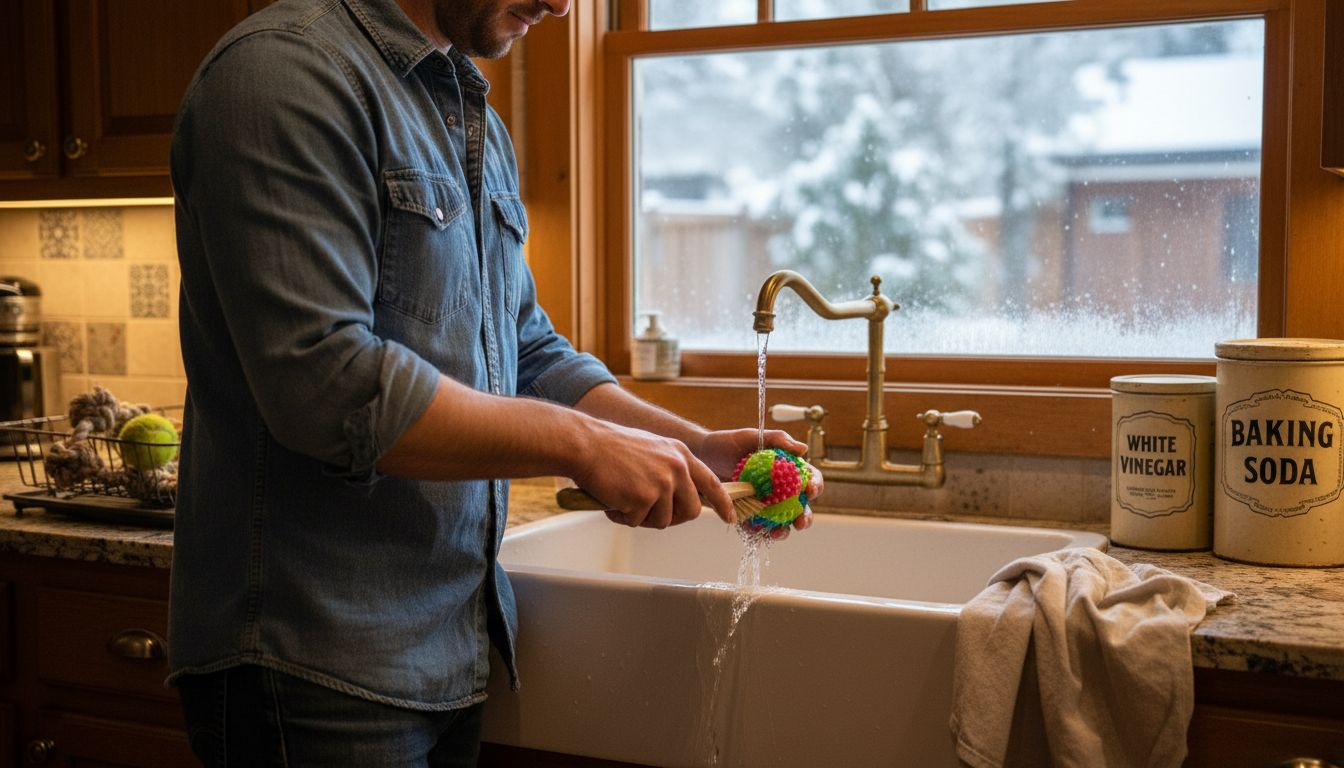
Pro Tip: Create a dedicated drying area with good air circulation to ensure toys dry completely before returning them to your dog, preventing potential mold growth and bacterial development.
Step 4: Dry and Inspect for Cleanliness
After washing your dog’s toys, the drying and inspection process is critical to ensure your pet receives clean and safe play items. This final stage helps prevent potential health risks and extends the life of your dog’s favorite playthings.
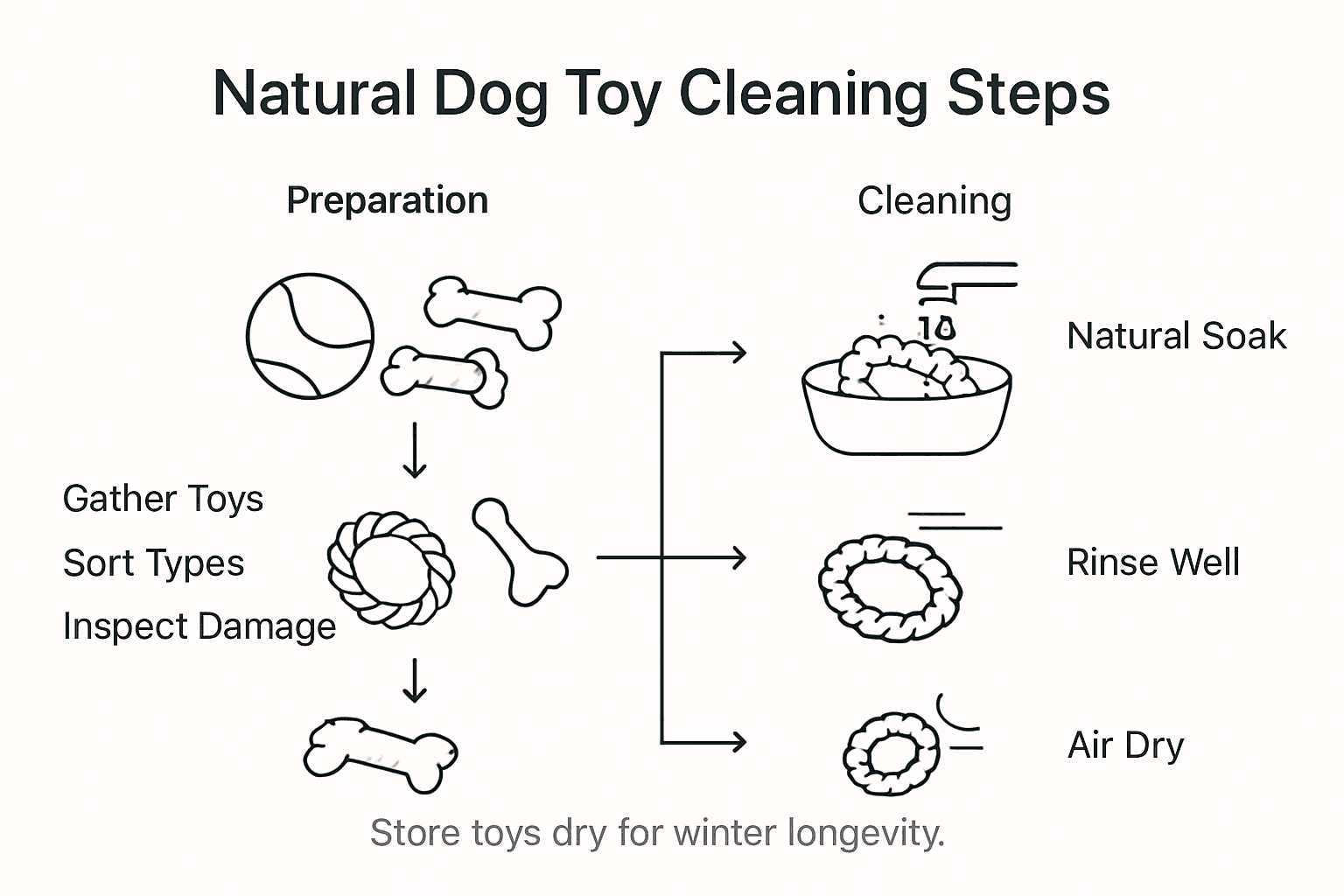
Best Pet Facts highlights the importance of thorough drying techniques for different toy materials, recommending specific approaches based on toy composition. For rubber and plastic toys, use clean towels to remove excess moisture, then place in a well ventilated area to air dry completely. Plush toys can be gently squeezed with a towel to remove water and then laid flat on a drying rack. Rope toys require careful attention to prevent mildew by ensuring they are thoroughly wrung out and positioned where air can circulate freely.
PetGuide recommends a meticulous post-washing inspection process to assess toy integrity and safety. Carefully examine each toy for signs of wear, including loose threads, small tears, or areas where material is breaking down. Pay special attention to chew toys and items that receive heavy use, as these are most likely to develop weak spots. Soft toys with significant damage should be replaced to prevent potential choking hazards or injuries. Rubber and plastic toys with deep cracks or significant wear should also be discarded to maintain your dog’s safety during playtime.
Pro Tip: Create a designated drying station with good air circulation near a window or fan, using a clean white towel underneath to quickly spot any remaining dirt or debris during the drying process.
Step 5: Store Toys Properly for Winter
Proper winter storage of your dog’s toys is crucial for maintaining their quality and ensuring they remain safe and hygienic for your furry friend. The right storage approach can significantly extend the lifespan of your pet’s favorite playthings during the cold months.
Learn Along With Me provides comprehensive guidance on winter toy storage strategies, emphasizing the importance of selecting the right storage containers and environment. Choose breathable storage bins with ventilation to prevent moisture buildup that could lead to mold or mildew. Plastic containers with small air holes or woven baskets work best for keeping toys dry and well circulated. Separate toys by material type soft plush toys should be stored differently from rubber chew toys to prevent potential moisture transfer and bacterial growth.
Before placing toys in winter storage, ensure they are completely dry and free from any residual moisture. Organize your collection by frequency of use, keeping most used toys easily accessible while carefully storing seasonal or less frequently played with items. Consider creating separate storage zones for indoor and outdoor toys, and periodically rotate toys to keep your dog engaged and prevent unnecessary wear on any single item. Winter warmth products can help protect sensitive toys from extreme temperature fluctuations during storage.
Pro Tip: Label your storage containers with the type of toys inside and the last cleaning date to help you track toy maintenance and rotation schedules more effectively.
Consider these winter storage strategies for different toy types and usage frequencies:
| Toy Type | Storage Recommendation | Rotation Tip |
|---|---|---|
| Chew Toys | Store in ventilated bins | Rotate weekly |
| Plush Toys | Use dry, breathable baskets | Rotate biweekly |
| Outdoor Toys | Separate into weatherproof container | Check for moisture monthly |
| Seasonal Toys | Place in labeled storage zone | Refresh before next season |
Keep Your Dog Cozy and Their Toys Fresh This Winter
Cleaning your dog’s toys naturally for winter longevity is essential to protect your furry friend from germs and wear during the cold months. But why stop there When you ensure their toys are clean, it is equally important to keep your dog comfortable and safe with the right winter apparel and accessories designed to withstand chilly weather. At FurFamilyClub, we understand that winter pet care means more than just cleaning. It means providing cozy sweaters, durable chew toys, and accessories that match your dog’s lifestyle and keep their play and comfort thriving all season.
Explore our wide selection of winter-ready pet products at FurFamilyClub to complement your natural cleaning routine. Whether you need stylish jackets to keep your dog warm or safe collars and toys built for cold weather fun, our collection supports your goal to care for your dog naturally and effectively. Act now and prepare your pup for a winter full of clean toys and cozy moments by browsing our offerings today.
Frequently Asked Questions
How often should I clean my dog’s toys for winter longevity?
Regularly clean your dog’s toys to maintain their longevity, ideally once a month or more frequently if they are heavily used. Establish a cleaning schedule to ensure toys remain hygienic and safe for playtime.
What natural cleaning solutions can I use for rubber and plastic dog toys?
Use a solution of one part white vinegar to three parts warm water to clean rubber and plastic toys naturally. Scrub the toys with the solution, rinse thoroughly, and let them air dry to ensure they are safe for your dog.
How can I check if my dog’s toys are safe after cleaning?
After cleaning, inspect each toy for signs of wear such as cracks, loose threads, or fraying. Discard any damaged toys to prevent potential choking hazards and keep your dog safe.
What is the best way to dry dog toys after washing them?
Air dry rubber and plastic toys in a well-ventilated area, while plush toys can be laid flat on a drying rack. Ensure all toys are completely dry before returning them to your dog to prevent mold growth.
How should I store dog toys during the winter months?
Store toys in breathable containers with ventilation to prevent moisture buildup and mold. Separate the toys by type, and make sure they are completely dry before placing them in storage to maintain their safety and quality.
Can I use baking soda when cleaning dog toys?
Yes, baking soda is a great natural deodorizer and can be used to scrub toys free of stubborn dirt and grime. Mix it with a bit of water to create a paste for tough stains and rinse thoroughly after cleaning.
Recommended
- Winter Warmth for Pets | Best Winter Products for Dogs & Cats – Furfamilyclub
- Best Dog Jackets to Buy in 2025 | Warm, Waterproof & Stylish Dog Coats – Furfamilyclub
- Choosing Durable and High-Quality Dog Jackets in the United States | F – Furfamilyclub
- FurFamilyClub – Jacket For Dogs Pet Cameras, Blankets & Accessories – Furfamilyclub
- Managing Winter Dog Shedding: Tips to Keep Your Home Fur-Free – iPupPee


